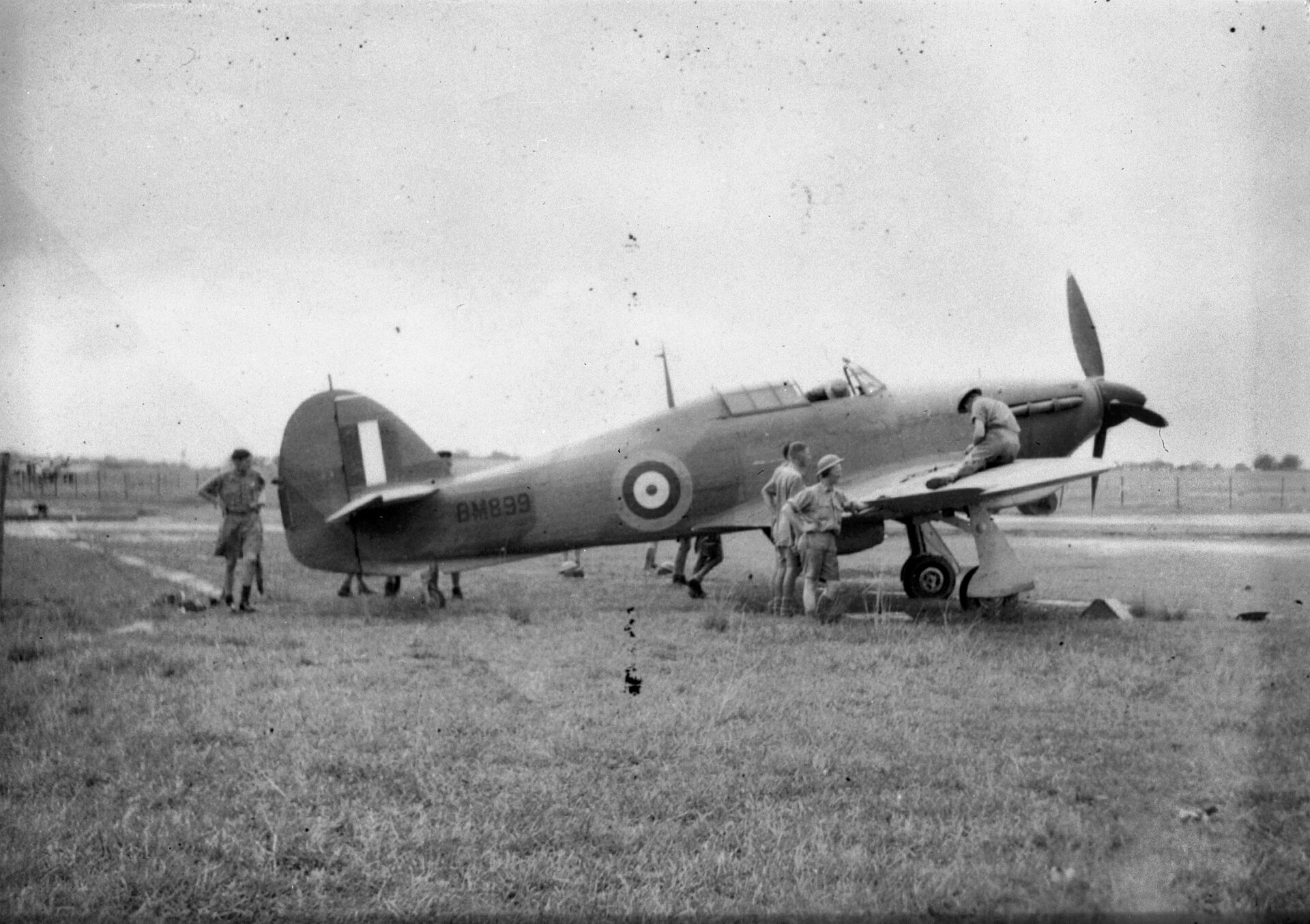
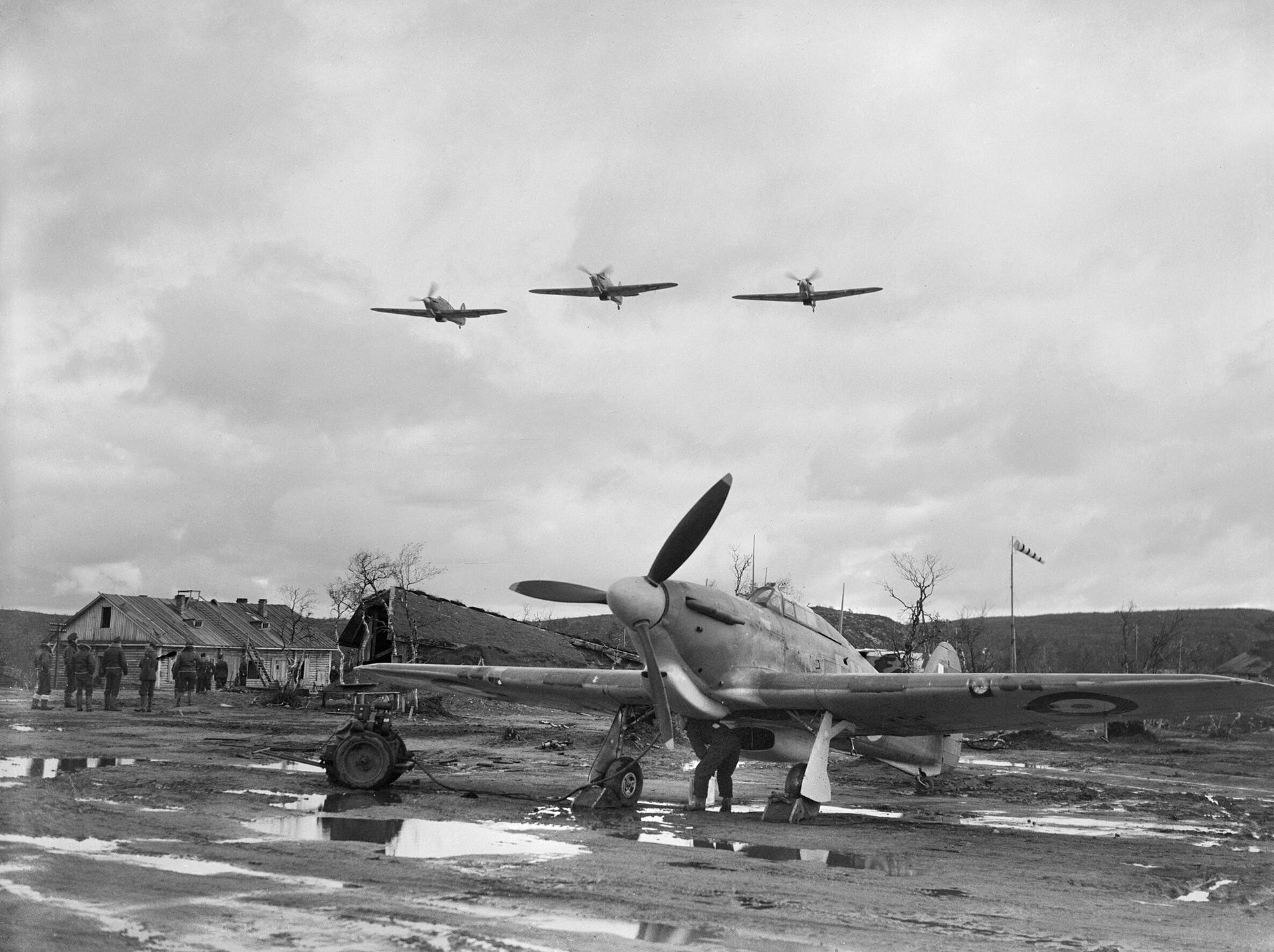
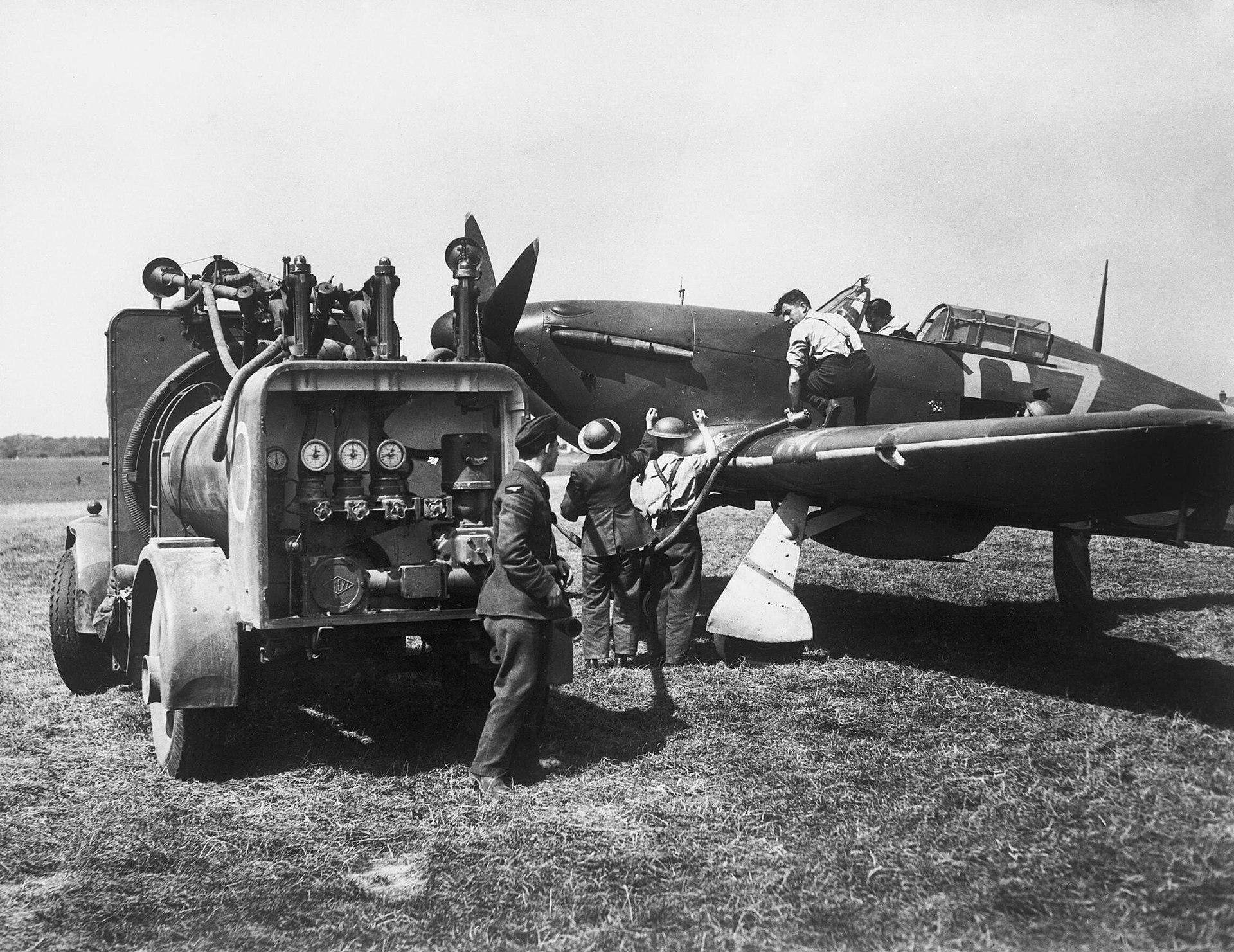
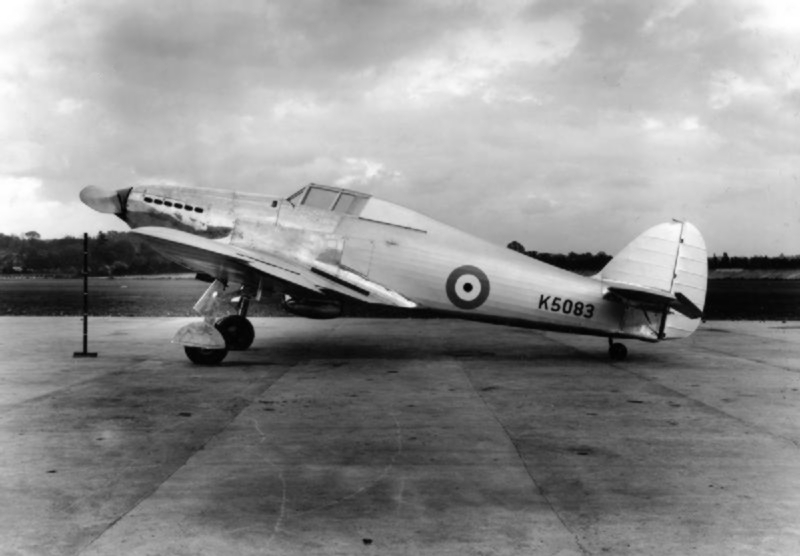
The Hurricane originated from discussions between RAF officials and aircraft designer Sir Sydney Camm about a proposed monoplane derivative of the Hawker Fury biplane in the early 1930s. Despite an institutional preference for biplanes and lack of interest by the Air Ministry, Hawker refined its monoplane proposal, incorporating several innovations which became critical to wartime fighter aircraft, including retractable landing gear and the more powerful Rolls-Royce Merlin engine. The Air Ministry ordered Hawker's Interceptor Monoplane in late 1934, and the prototype Hurricane K5083 performed its maiden flight on 6 November 1935.
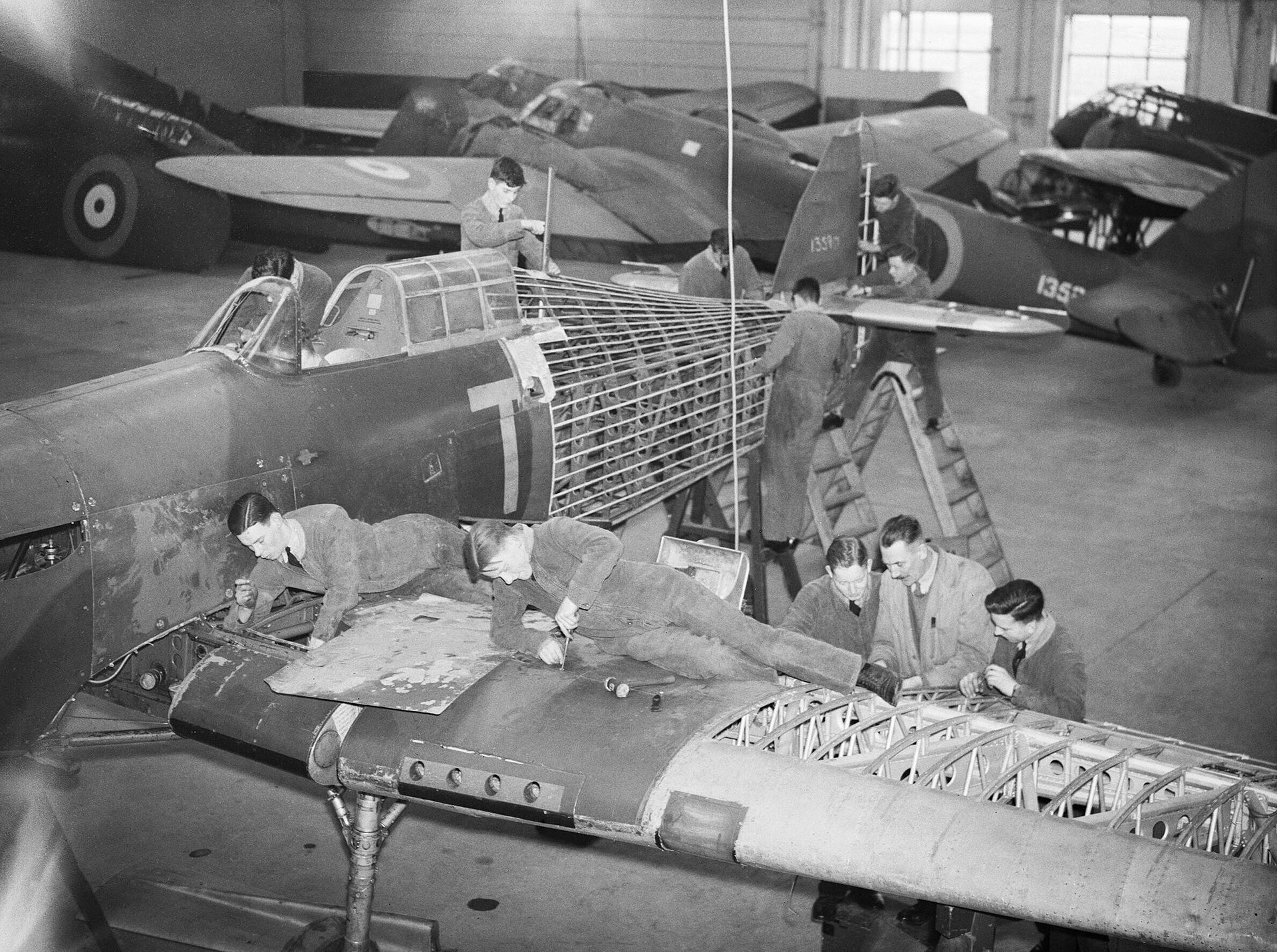
The Hurricane went into production for the Air Ministry In June 1936 and entered squadron service in December 1937. Its manufacture and maintenance were eased by using conventional construction methods so that squadrons could perform many major repairs without external support. The plane was rapidly procured prior to the outbreak of the Second World War; in September 1939, the RAF had 18 Hurricane-equipped squadrons in service. It was relied upon to defend against German aircraft operated by the Luftwaffe, including dogfighting with Messerschmitt Bf 109s in multiple theatres of action.
The Hurricane was developed through several versions: bomber-interceptors, fighter-bombers, and ground support aircraft as well as fighters. Versions designed for the Royal Navy known as the Sea Hurricane had modifications including an arrestor hook near the tail, enabling operation from ships. Some were converted as catapult-launched convoy escorts. By the end of production in July 1944, 14,487 units[1] had been completed in Britain and Canada, with others built in Belgium and Yugoslavia.