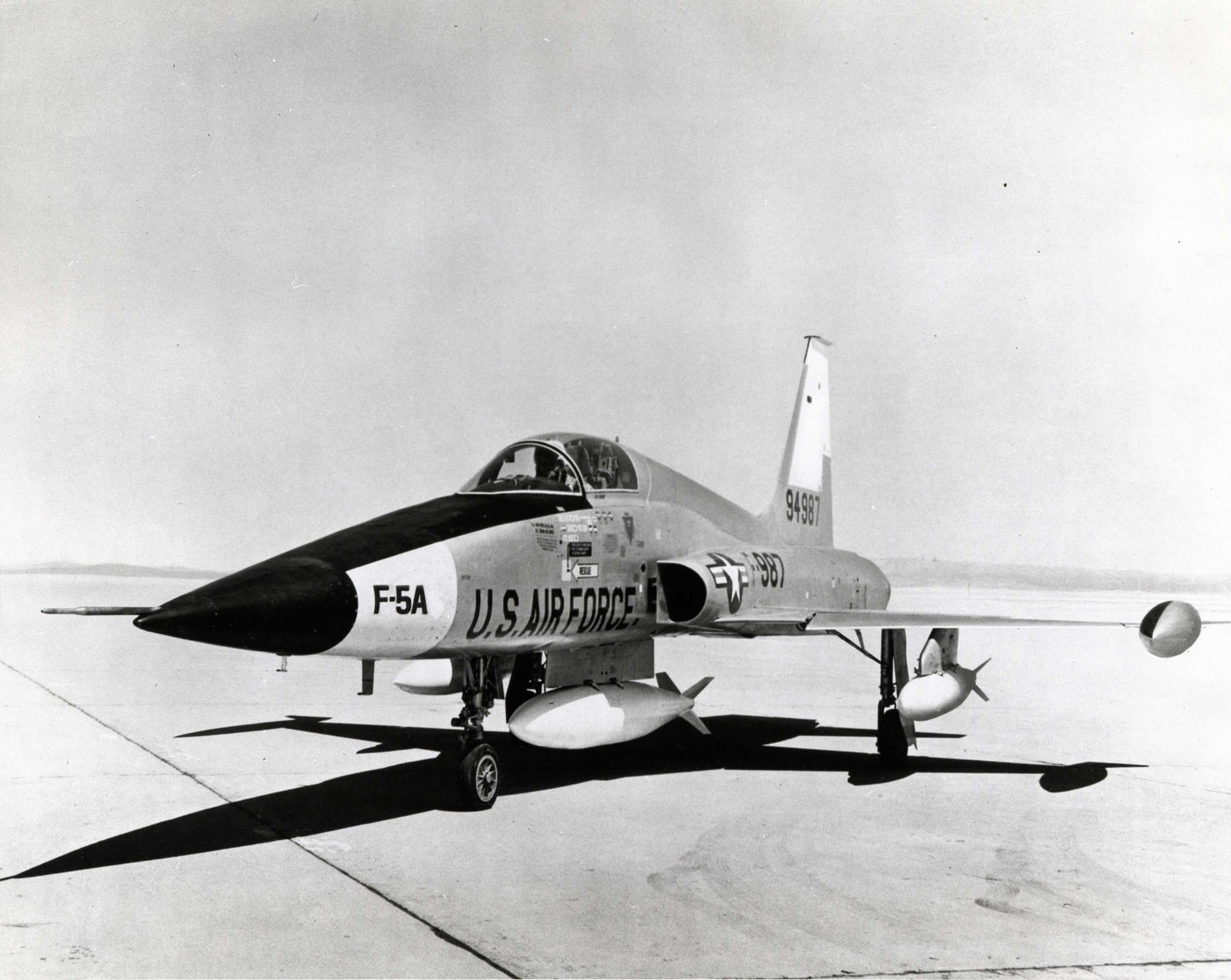
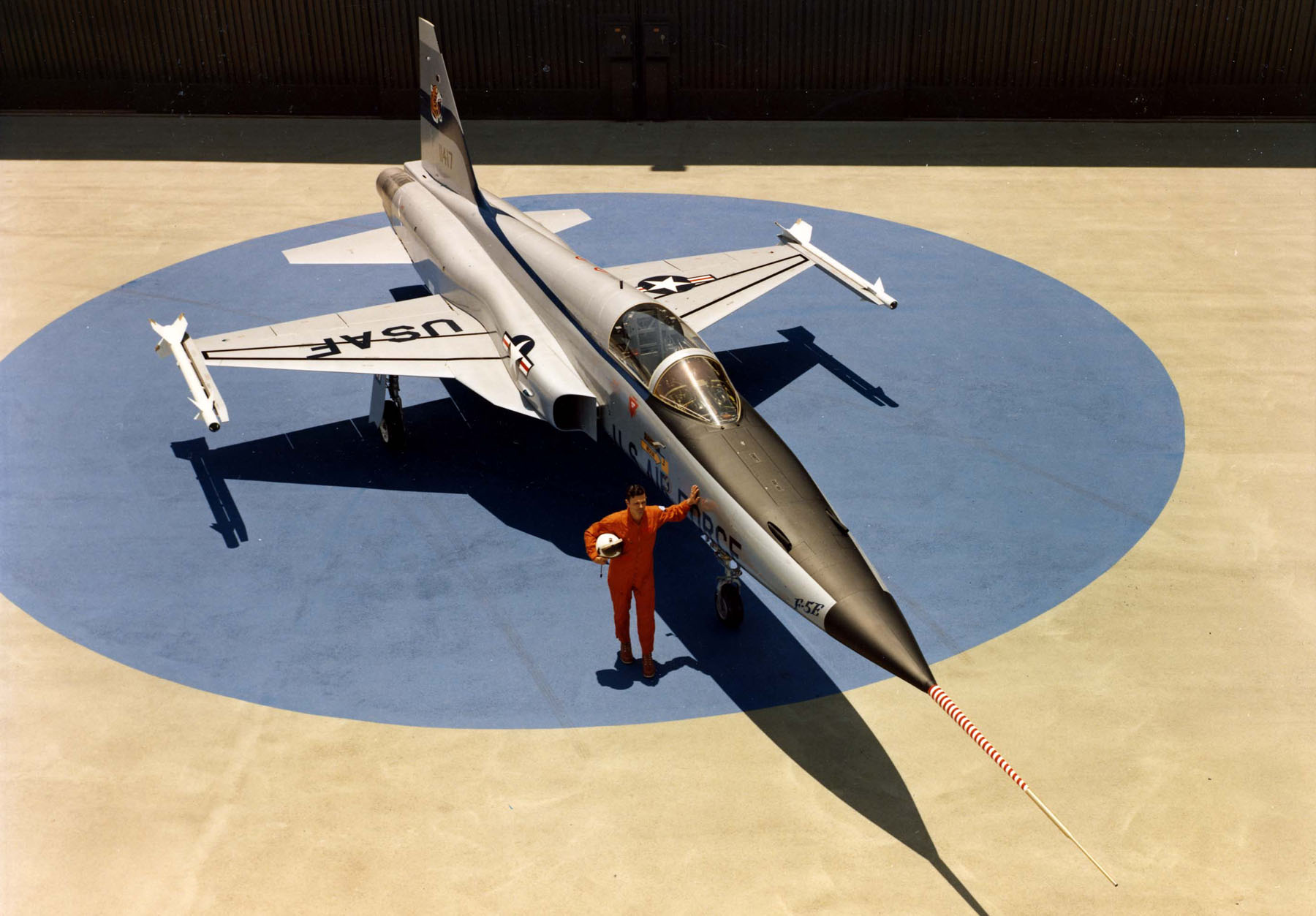
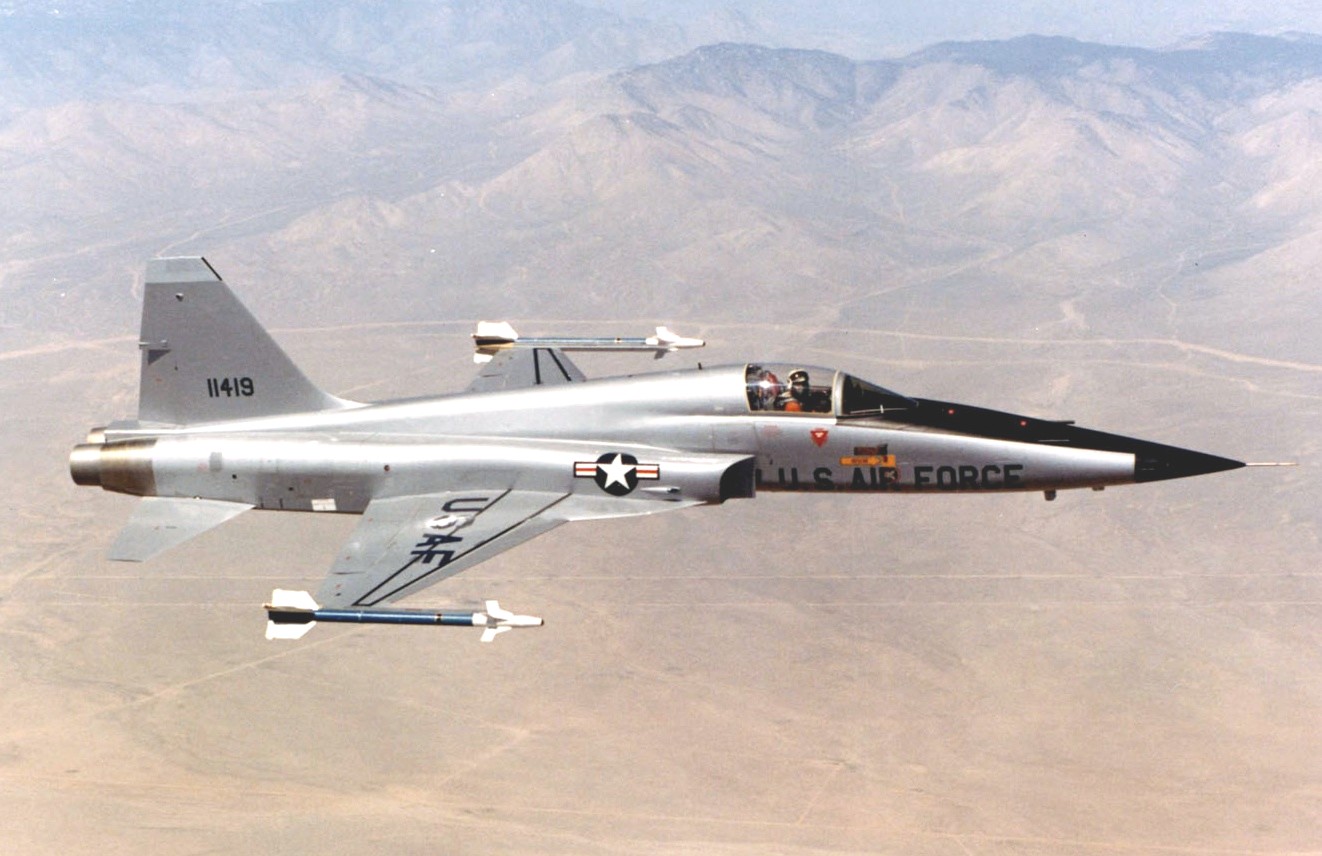
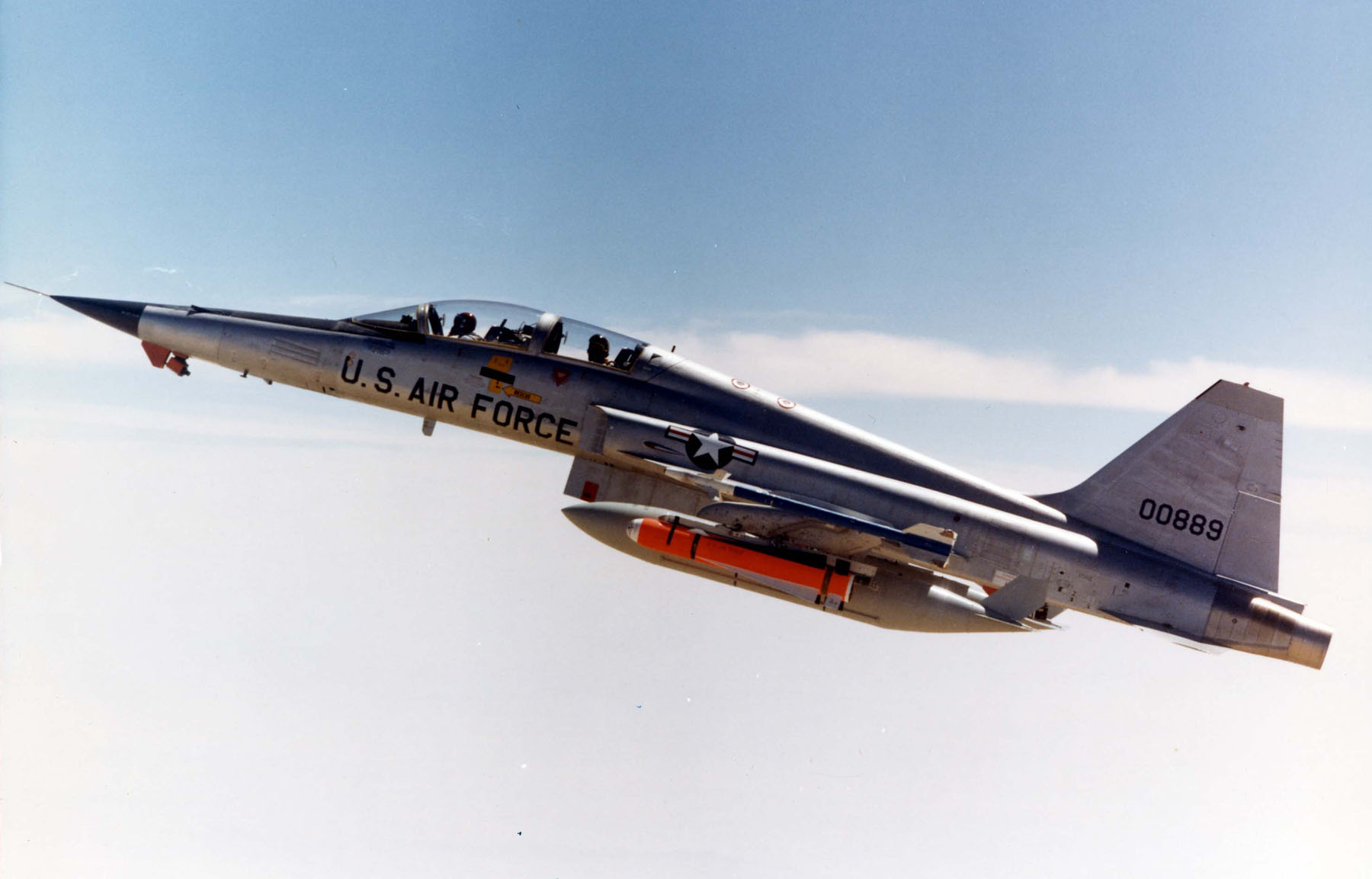
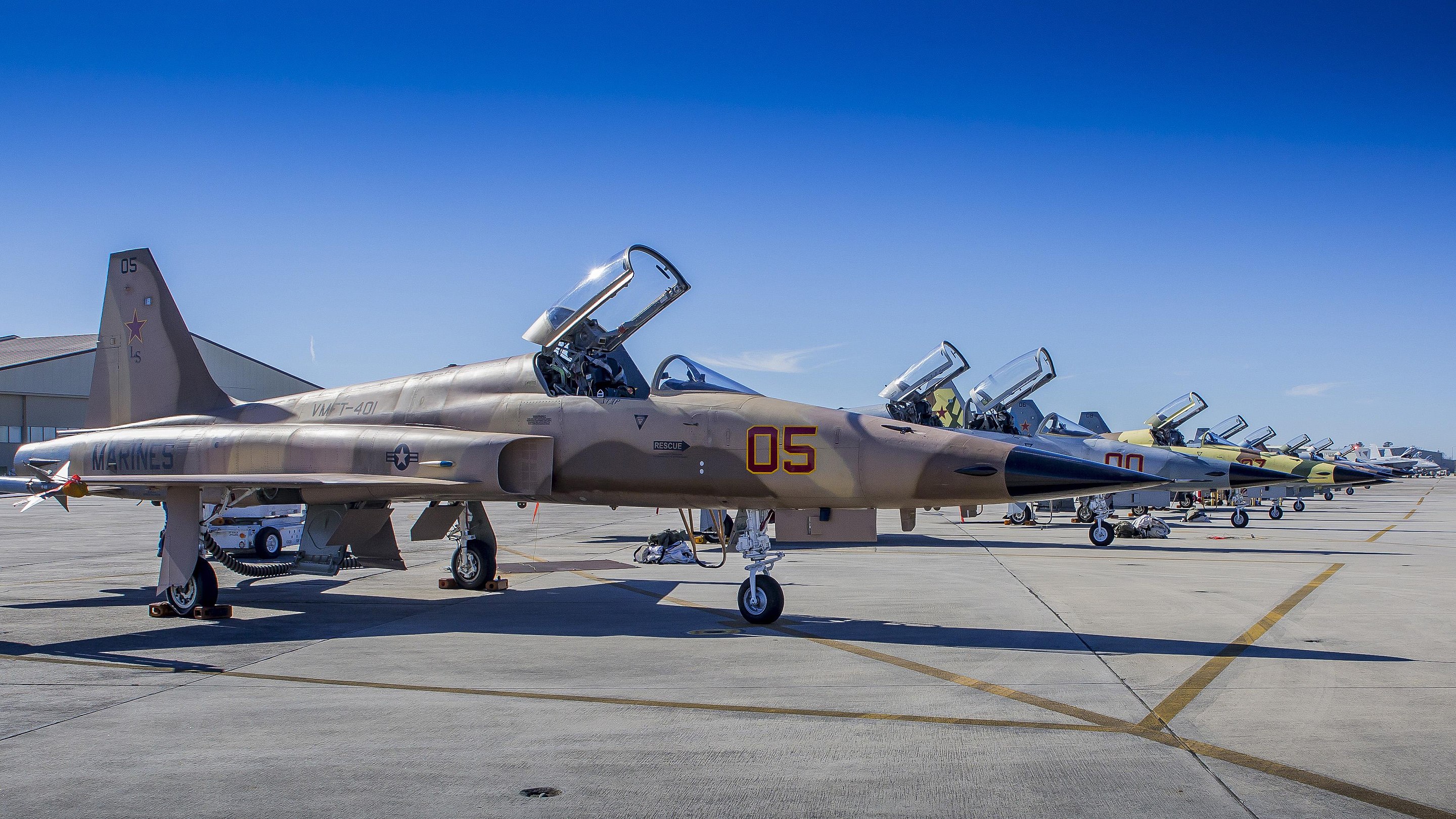
F5 Northrop CHARACTERISTICS
General characteristics
Crew: 1
Length: 48 ft 2.25 in (14.6876 m)
Wingspan: 26 ft 8 in (8.13 m)
27 ft 11.875 in (8.53123 m) with wing-tip missiles
Height: 13 ft 4.5 in (4.077 m)
Wing area: 186 sq ft (17.3 m2)
Aspect ratio: 3.86
Airfoil: NACA 65A004.8[264]
Empty weight: 9,583 lb (4,347 kg)
Gross weight: 15,745 lb (7,142 kg) clean
Max takeoff weight: 24,675 lb (11,192 kg)
Fuel capacity:
Internal fuel: 677 US gal (564 imp gal; 2,560 L)
External fuel: up to 3x 275 US gal (229 imp gal; 1,040 L) drop-tanks
Lift-to-drag ratio: 10.0
Zero-lift drag coefficient: CD0.0200
Frontal area: 3.4 sq ft (0.32 m2)
Powerplant: 2 × General Electric J85-GE-21 afterburning turbojet engines, 3,500 lbf (16 kN) thrust each dry, 5,000 lbf (22 kN) with afterburner
Performance
Maximum speed: Mach 1.63 (1,741 km/h; 1,082 mph) at 36,000 ft (11,000 m)
Maximum cruise speed: Mach 0.98 (1,050 km/h; 650 mph) at 36,000 ft (11,000 m)
Economical cruise speed: Mach 0.8 (850 km/h; 530 mph) at 36,000 ft (11,000 m)
Stall speed: 124 kn (143 mph, 230 km/h) 50% internal fuel, flaps and wheels extended
Never exceed speed: 710 kn (820 mph, 1,310 km/h) IAS
Range: 481 nmi (554 mi, 891 km) clean
Combat radius (20 min reserve): 120 nmi (140 mi; 220 km) with 2x Sidewinders + 5,200 lb (2,400 kg) ordnance, with 5 minutes combat at max power at sea level
Ferry range: 2,010 nmi (2,310 mi, 3,720 km) [265]
Ferry range (20 min reserve): 1,385 nmi (1,594 mi; 2,565 km) drop tanks retained
Ferry range (20 min reserve): 1,590 nmi (1,830 mi; 2,940 km) drop tanks jettisoned
Service ceiling: 51,800 ft (15,800 m)
Service ceiling one engine out: 41,000 ft (12,000 m)
Rate of climb: 34,500 ft/min (175 m/s)
Lift-to-drag: 10:1
Wing loading: 133 lb/sq ft (650 kg/m2) maximum
Thrust/weight: 0.4 for take-off thrust at maximum take-off weight
Take-off run: 2,000 ft (610 m) with two Sidewinders at 15,745 lb (7,142 kg)
Take-off run to 50 ft (15 m): 2,900 ft (884 m) with two Sidewinders at 15,745 lb (7,142 kg)
Landing run from 50 ft (15 m): 3,701 ft (1,128 m) without brake-chute
Landing run from 50 ft (15 m): 2,500 ft (762 m) with brake-chute
Armament
Guns: 2× 20 mm (0.787 in) M39A2 Revolver cannon in the nose, 280 rounds/gun
Hardpoints: 7 total (only pylon stations 3, 4 and 5 are wet-plumbed): 2× wing-tip AAM launch rails, 4× under-wing & 1× under-fuselage pylon stations with a capacity of 7,000 pounds (3,200 kg), with provisions to carry combinations of:
Rockets:
2× LAU-61/LAU-68 rocket pods (each with 19× /7× Hydra 70 mm rockets, respectively); or
2× LAU-5003 rocket pods (each with 19× CRV7 70 mm rockets); or
2× LAU-10 rocket pods (each with 4× Zuni 127 mm rockets); or
2× Matra rocket pods (each with 18× SNEB 68 mm rockets)
Missiles:
2× AIM-9 Sidewinder air-to-air missile on wingtips (initial F-5E Tiger II loadout)[266]
4× AIM-9 Sidewinder or 4× AIM-120 AMRAAM[267] air-to-air missile (F-5S and modernized F-5E)
4× AGM-65 Maverick air-to-surface missiles (on upgraded F-5 after 1995)[268]
AA-8 Aphid, AA-10 Alamo, AA-11 Archer and other Russian/Chinese AAMs (Iranian ver.)
Bombs: A variety of air-to-ground ordnance such as the Mark 80 series of unguided bombs (including 3 kg and 14 kg practice bombs), CBU-24/49/52/58 cluster bomb munitions, napalm bomb canisters and M129 Leaflet bomb, and laser-guided bombs of Paveway family.
Other:
up to 3× 150 / 275 US gallons (570 / 1,040 L; 125 / 229 imp gal) Sargent Fletcher drop tanks for ferry flight or extended range/loitering time.
1× GPU-5/A 30mm cannon pods on the centreline station (fitted only on Thai F-5s)