Douglas Aircraft Company
McDonnell Douglas
A4 Skyhawk
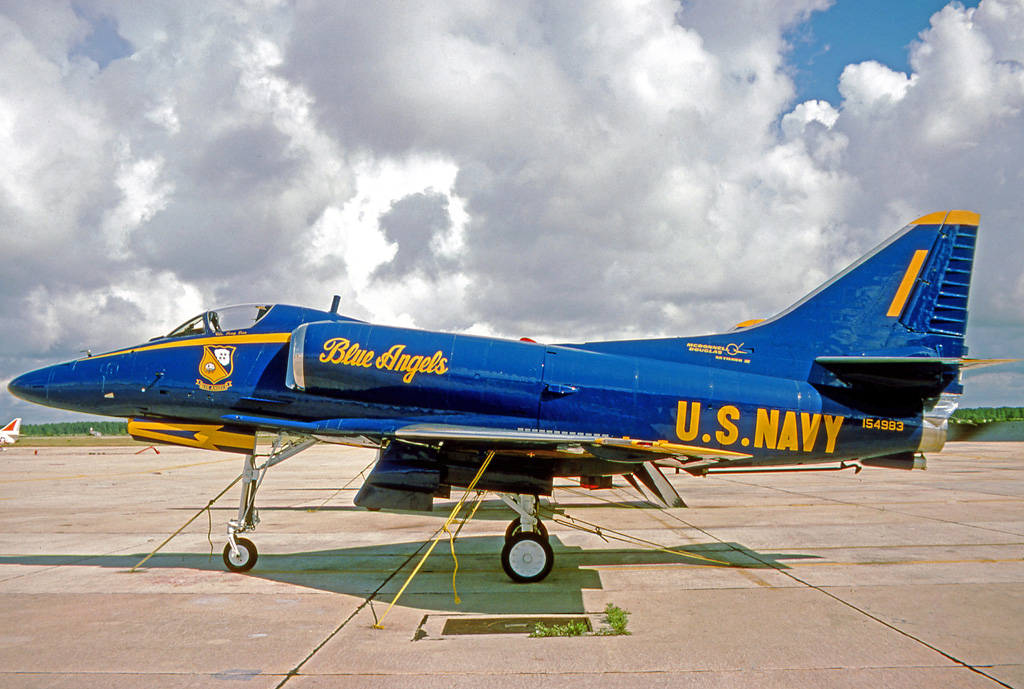
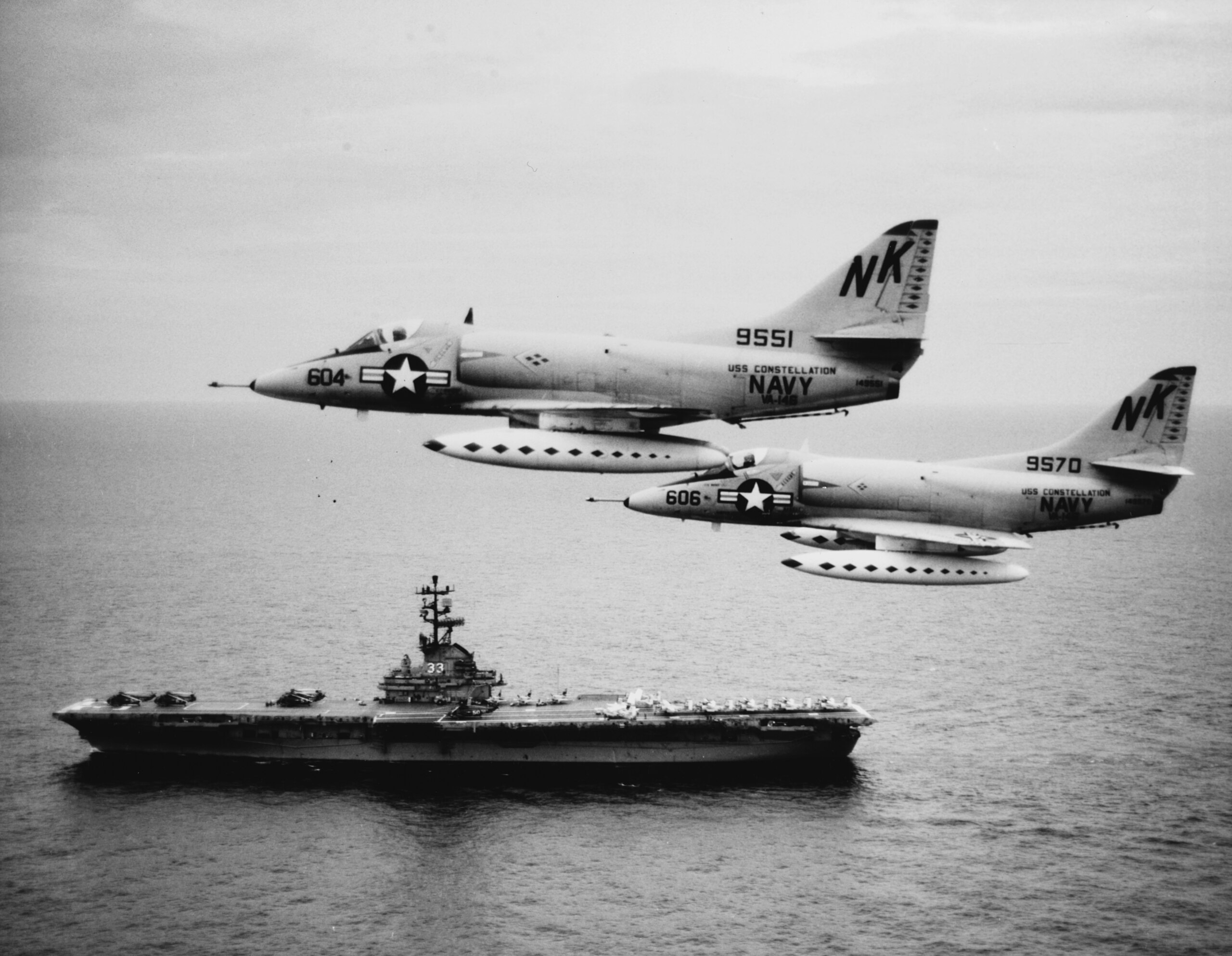
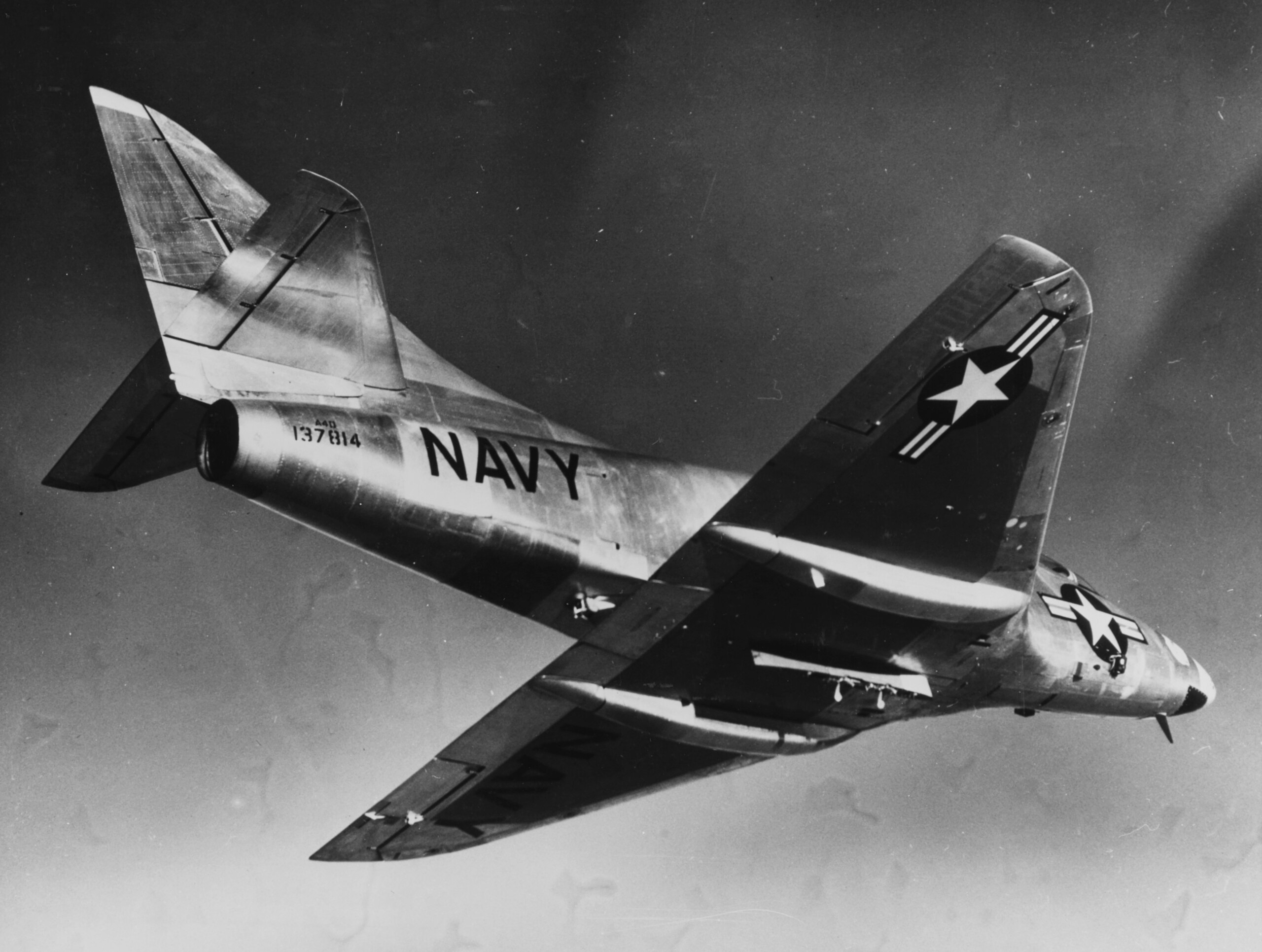
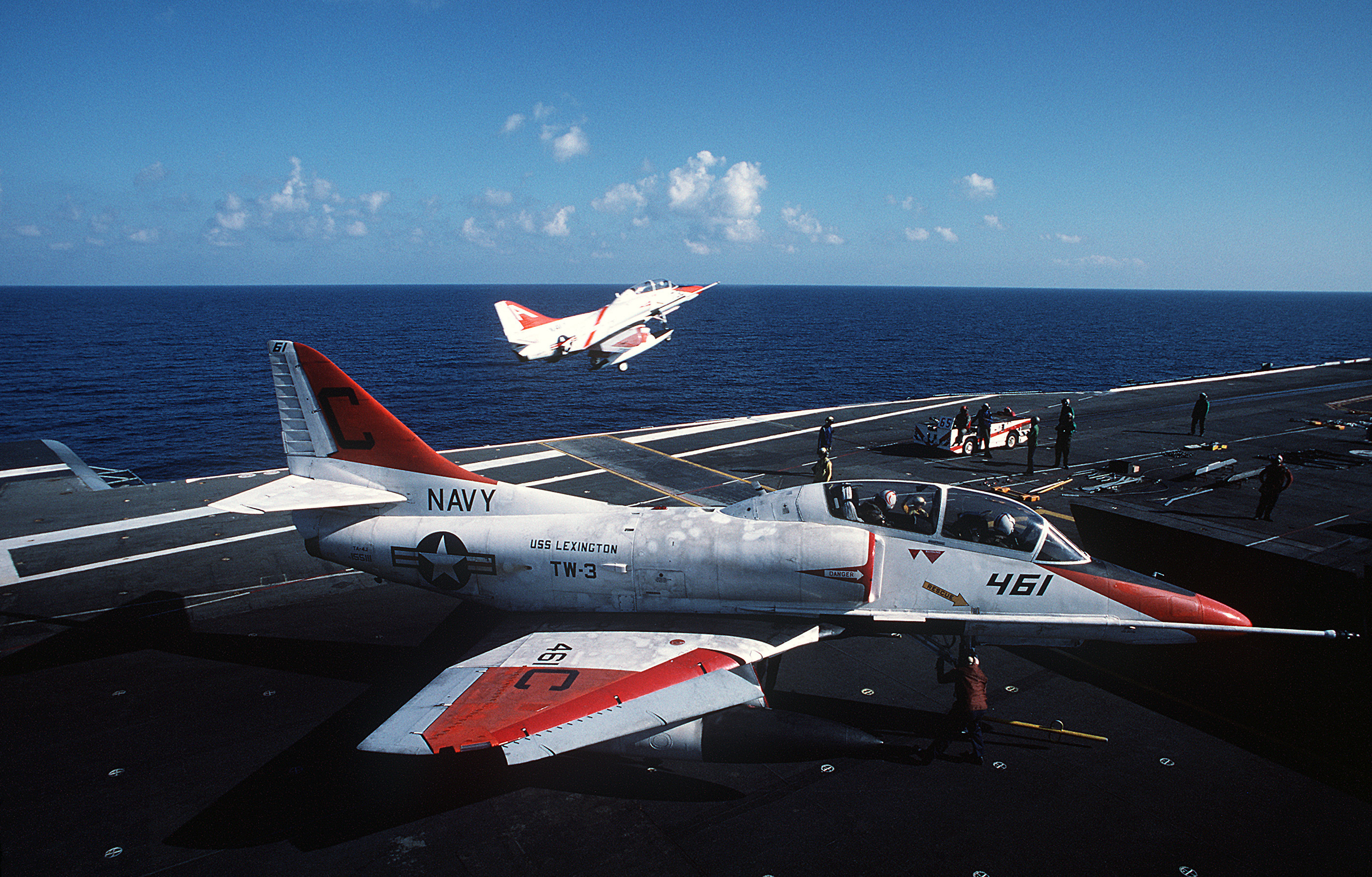
The Douglas A-4 Skyhawk is a single-seat subsonic carrier-capable light attack aircraft designed and produced by the American aerospace manufacturer Douglas Aircraft Company, and later, McDonnell Douglas. It was originally designated A4D under the United States Navy's pre-1962 designation system.
The Skyhawk was developed during the early 1950s on behalf of the U.S. Navy and United States Marine Corps as a replacement for the propeller-driven Douglas A-1 (AD) Skyraider. The A-4 is by comparison, a compact, straightforward, and lightweight aircraft for the era. Its maximum takeoff weight of 24,500 pounds (11,100 kg) being roughly half of the Navy's weight specification. The Skyhawk has a short-span delta wing configuration, a tricycle undercarriage, and is powered by a single turbojet engine. The U.S. Navy issued a contract for the aircraft on 12 June 1952. On 22 June 1954, the XA4D-1 prototype performed its maiden flight; it went on to set a world speed record of 695.163 mph on 15 October 1955.[1] On 1 October 1956, the Skyhawk was introduced to operational service.
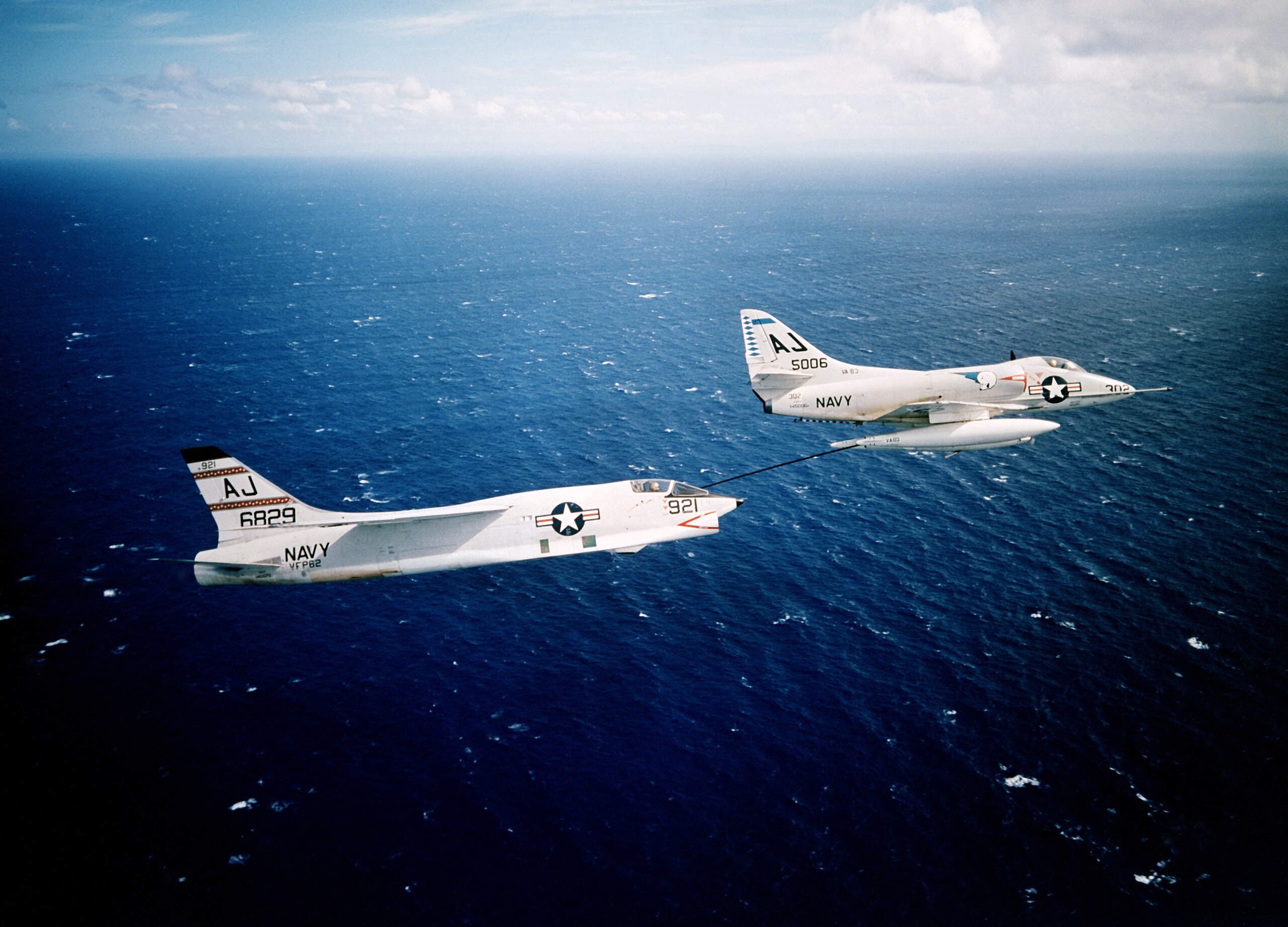
The Douglas A-4 Skyhawk is a single-seat subsonic carrier-capable light attack aircraft designed and produced by the American aerospace manufacturer Douglas Aircraft Company, and later, McDonnell Douglas. It was originally designated A4D under the United States Navy's pre-1962 designation system.
The Skyhawk was developed during the early 1950s on behalf of the U.S. Navy and United States Marine Corps as a replacement for the propeller-driven Douglas A-1 (AD) Skyraider. The A-4 is by comparison, a compact, straightforward, and lightweight aircraft for the era. Its maximum takeoff weight of 24,500 pounds (11,100 kg) being roughly half of the Navy's weight specification. The Skyhawk has a short-span delta wing configuration, a tricycle undercarriage, and is powered by a single turbojet engine. The U.S. Navy issued a contract for the aircraft on 12 June 1952. On 22 June 1954, the XA4D-1 prototype performed its maiden flight; it went on to set a world speed record of 695.163 mph on 15 October 1955.[1] On 1 October 1956, the Skyhawk was introduced to operational service.
A4 Skyhawk CHARACTERISTICS
General characteristics
Crew: 1
Length: 40 ft 1.5 in (12.230 m)
Wingspan: 27 ft 6 in (8.38 m)
Height: 15 ft 2 in (4.62 m)
Wing area: 260 sq ft (24 m2)
Airfoil: root: NACA 0008-1.1-25; tip: NACA 0005-.825-50[156]
Empty weight: 9,853 lb (4,469 kg)
Gross weight: 16,216 lb (7,355 kg)
Max takeoff weight: 24,500 lb (11,113 kg)
Powerplant: 1 × Pratt & Whitney J52-P-6A turbojet engine, 8,500 lbf (38 kN) thrust
Performance
Maximum speed: 585 kn (673 mph, 1,083 km/h) at sea level
Range: 1,008 nmi (1,160 mi, 1,867 km)
Ferry range: 2,194 nmi (2,525 mi, 4,063 km)
g limits: +8 -3
Rate of climb: 5,750 ft/min (29.2 m/s)
Wing loading: 62.4 lb/sq ft (305 kg/m2)
Thrust/weight: 0.526 (at gross weight)
Armament
Guns: 2× 20 mm (0.79 in) Colt Mk 12 cannon, 100 rounds/gun
Hardpoints: 4× under-wing & 1× under-fuselage pylon stations with a capacity of 8,500 lb (3,900 kg), with provisions to carry combinations of:
Rockets: 4× LAU-10 rocket pods (each with 4× 127 mm Mk 32 Zuni rockets)
Bombs:
6× Rockeye-II Mark 20 Cluster Bomb Unit (CBU)
6× Rockeye Mark 7/APAM-59 CBU
Mark 80 series of unguided bombs (including 3 kg and 14 kg practice bombs)
B43 nuclear bomb
B57 nuclear bomb
B61 nuclear bomb
Other: up to 3× 370 US gallons (1,400 L) Sargent Fletcher drop tanks for ferry flight/extended range/loitering time
Missiles:
Air-to-air missiles:
4× AIM-9 Sidewinder
Air-to-surface missiles:
2× AGM-12 Bullpup
2× AGM-45 Shrike anti-radiation missile
2× AGM-62 Walleye TV-guided glide bomb
2× AGM-65 Maverick
The Skyhawk was developed during the early 1950s on behalf of the U.S. Navy and United States Marine Corps as a replacement for the propeller-driven Douglas A-1 (AD) Skyraider.