Northrop
B-2 Spirit
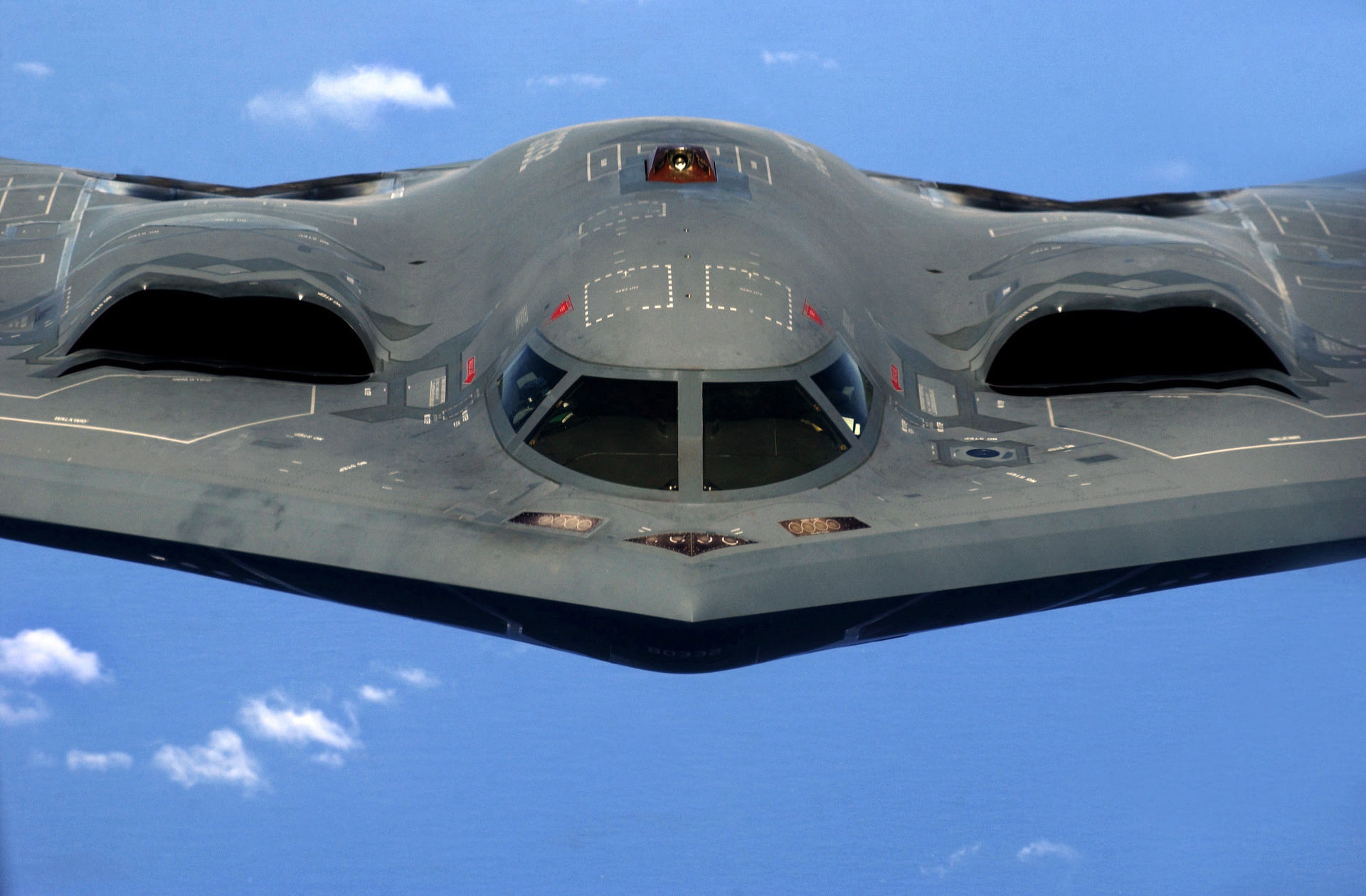
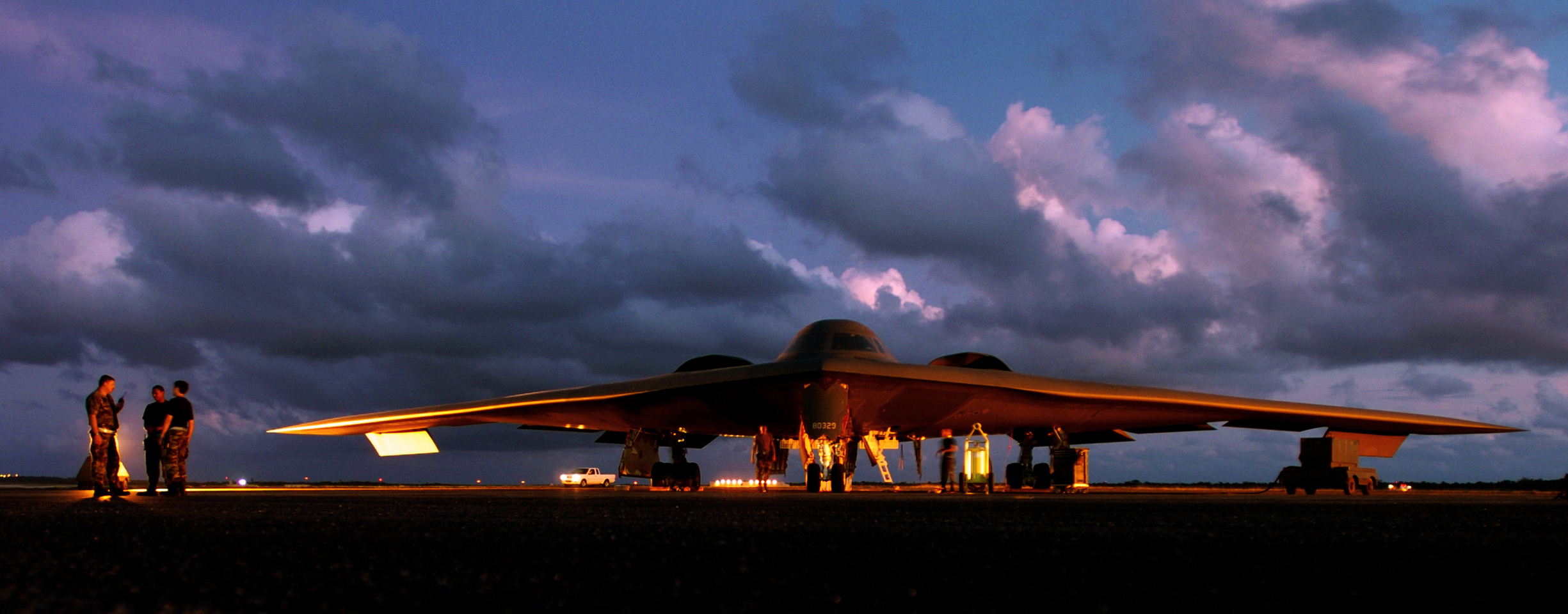
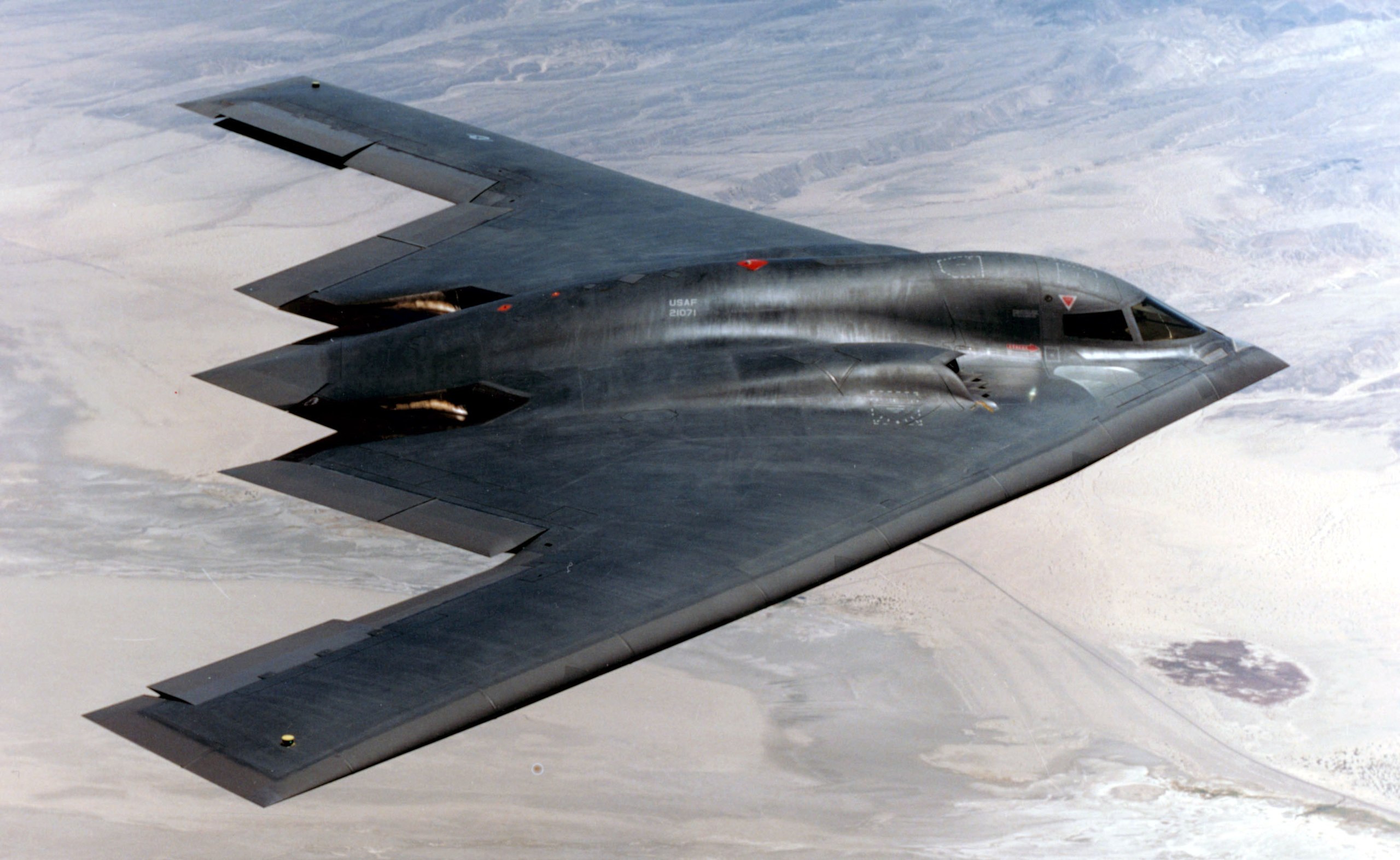
The Northrop B-2 Spirit, also known as the Stealth Bomber, is an American heavy strategic bomber, featuring low-observable stealth technology designed to penetrate dense anti-aircraft defenses. A subsonic flying wing with a crew of two, the plane was designed by Northrop (later Northrop Grumman) as the prime contractor, with Boeing, Hughes, and Vought as principal subcontractors, and was produced from 1987 to 2000.[1][3] The bomber can drop conventional and thermonuclear weapons,[4] such as up to eighty 500-pound class (230 kg) Mk 82 JDAM GPS-guided bombs, or sixteen 2,400-pound (1,100 kg) B83 nuclear bombs. The B-2 is the only acknowledged in-service aircraft that can carry large air-to-surface standoff weapons in a stealth configuration.
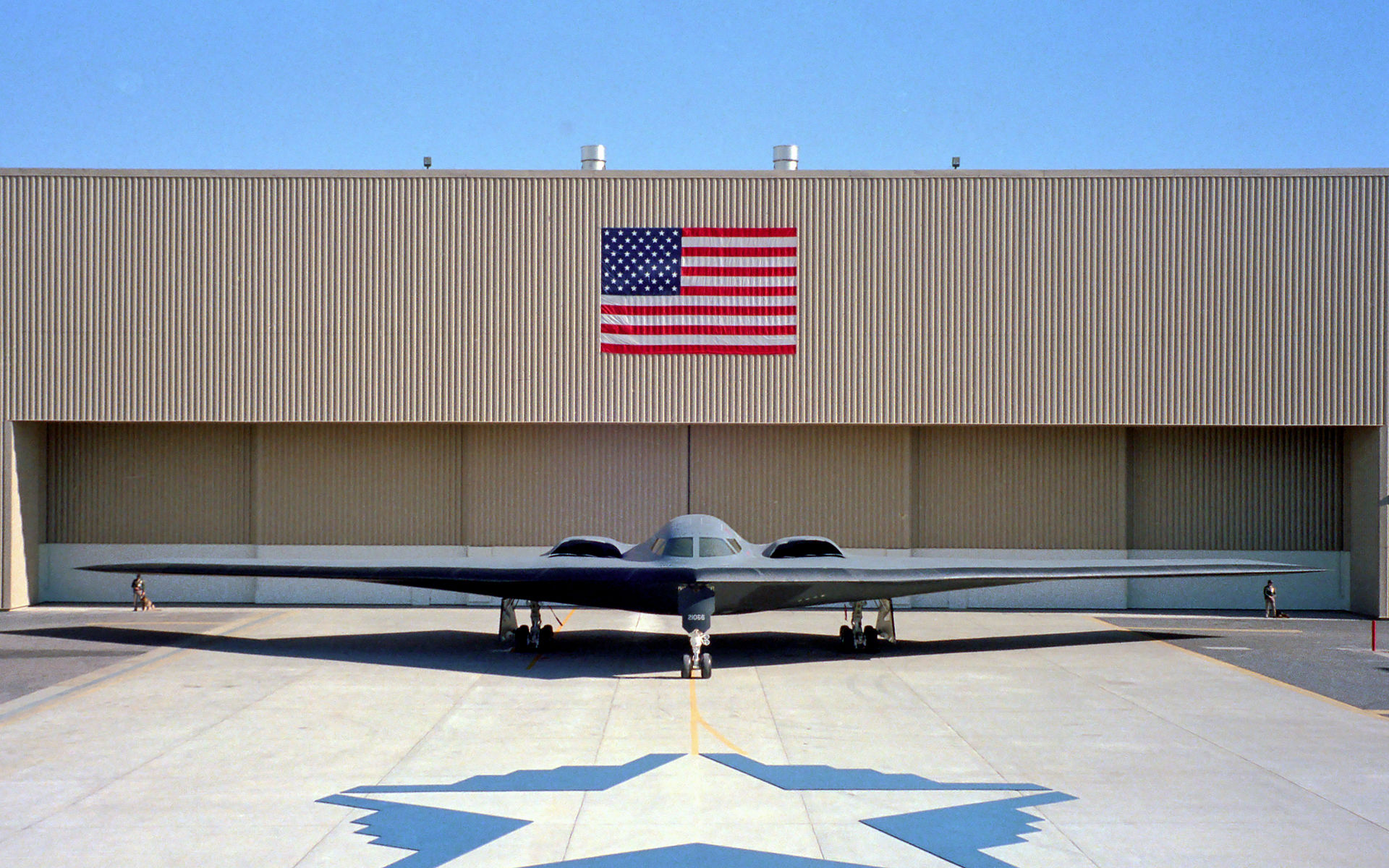
Development began under the Advanced Technology Bomber (ATB) project during the Carter administration, which cancelled the Mach 2-capable B-1A bomber in part because the ATB showed such promise. But development difficulties delayed progress and drove up costs. Ultimately, the program produced 21 B-2s at an average cost of $2.13 billion (~$4.04 billion in 2023), including development, engineering, testing, production, and procurement.[5] Building each aircraft cost an average of US$737 million,[5] while total procurement costs (including production, spare parts, equipment, retrofitting, and software support) averaged $929 million (~$1.11 billion in 2023) per plane.[5] The project's considerable capital and operating costs made it controversial in the U.S. Congress even before the winding down of the Cold War dramatically reduced the desire for a stealth aircraft designed to strike deep in Soviet territory. Consequently, in the late 1980s and 1990s lawmakers shrank the planned purchase of 132 bombers to 21.
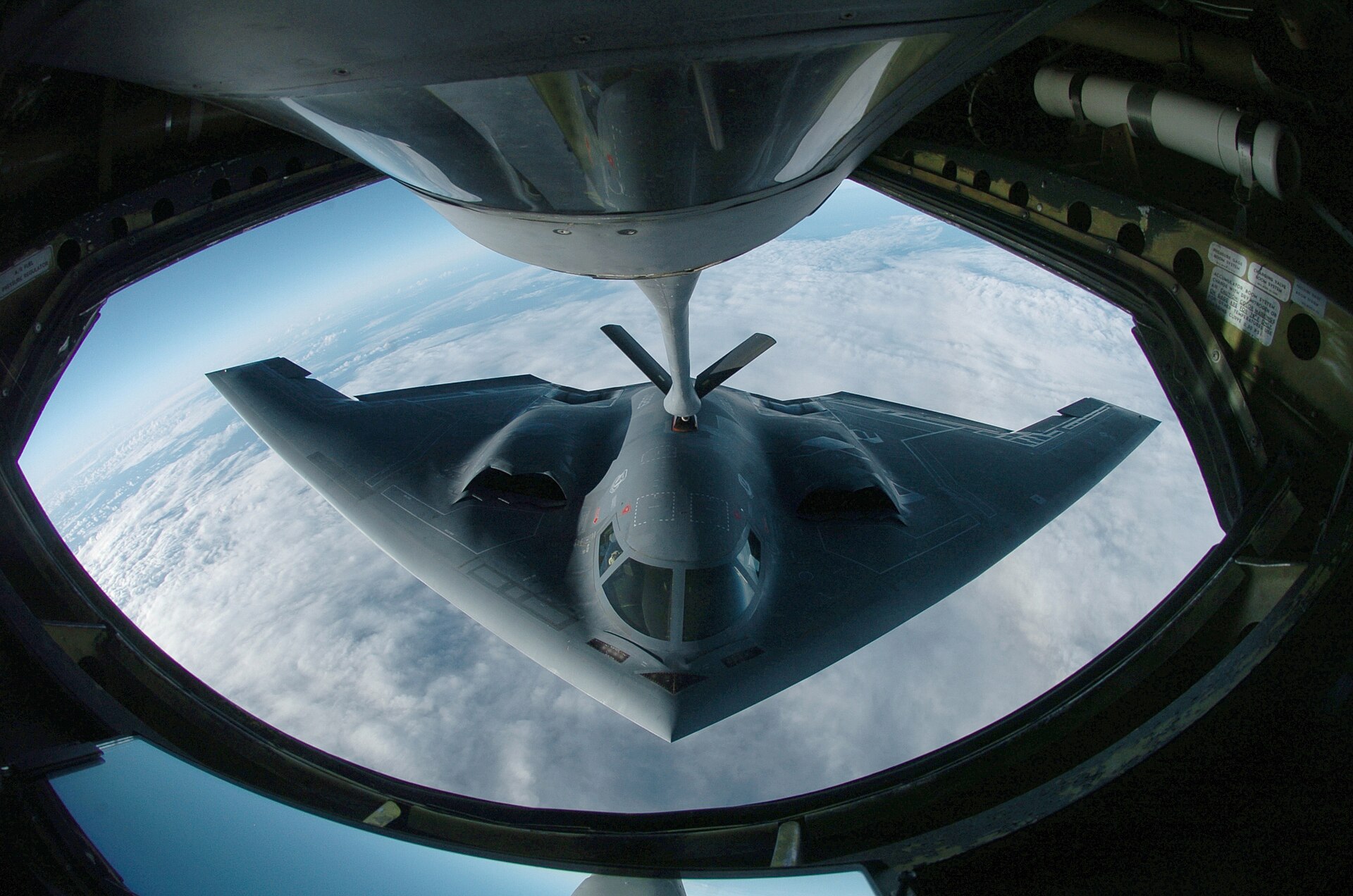
The B-2 can perform attack missions at altitudes of up to 50,000 feet (15,000 m); it has an unrefueled range of more than 6,000 nautical miles (6,900 mi; 11,000 km) and can fly more than 10,000 nautical miles (12,000 mi; 19,000 km) with one midair refueling. It entered service in 1997 as the second aircraft designed with advanced stealth technology, after the Lockheed F-117 Nighthawk attack aircraft. Primarily designed as a nuclear bomber, the B-2 was first used in combat to drop conventional, non-nuclear ordnance in the Kosovo War in 1999. It was later used in Iraq, Afghanistan, and Libya.[6]
The United States Air Force has nineteen B-2s in service as of 2024;[7] one was destroyed in a 2008 crash[8] and another was lost to a crash in 2022.[7] The Air Force plans to operate them until 2032, when the Northrop Grumman B-21 Raider is to replace them.[9]
B-2 Spirit CHARACTERISTICS
General characteristics
Crew: 2: pilot (left seat) and mission commander (right seat)
Length: 69 ft 0 in (21.0 m)
Wingspan: 172 ft 0 in (52.4 m)
Height: 17 ft 0 in (5.18 m)
Wing area: 5,140 sq ft (478 m2)
Empty weight: 158,000 lb (71,700 kg)
Gross weight: 336,500 lb (152,200 kg)
Max takeoff weight: 376,000 lb (170,600 kg)
Fuel capacity: 167,000 pounds (75,750 kg)
Powerplant: 4 × General Electric F118-GE-100 non-afterburning turbofans, 17,300 lbf (77 kN) thrust each
Performance
Maximum speed: 630 mph (1,010 km/h, 550 kn) at 40,000 ft (12,000 m) altitude / Mach 0.95 at sea level[171]
Cruise speed: 560 mph (900 km/h, 487 kn) at 40,000 ft (12,000 m) altitude
Range: 6,900 mi (11,000 km, 6,000 nmi)
Service ceiling: 50,000 ft (15,200 m)
Wing loading: 67.3 lb/sq ft (329 kg/m2)
Thrust/weight: 0.205
Armament
2 internal bays for ordnance and payload with an official limit of 40,000 lb (18,000 kg); maximum estimated limit is 50,000 lb (23,000 kg)[74]
80× 500 lb (230 kg) class bombs (Mk-82, GBU-38) mounted on Bomb Rack Assembly (BRA)
36× 750 lb (340 kg) CBU class bombs on BRA
16× 2,000 lb (910 kg) class bombs (Mk-84, GBU-31) mounted on Rotary Launcher Assembly (RLA)
16× B61 or B83 nuclear bombs on RLA (strategic mission)
Standoff weapon: AGM-154 Joint Standoff Weapon (JSOW) and AGM-158 Joint Air-to-Surface Standoff Missile (JASSM)[173][174]
2× GBU-57 Massive Ordnance Penetrator[175]
No operational B-2s have been retired by the Air Force to be put on display. B-2s have made occasional appearances on ground display at various air shows.