Rockwell
B-1 Lancer
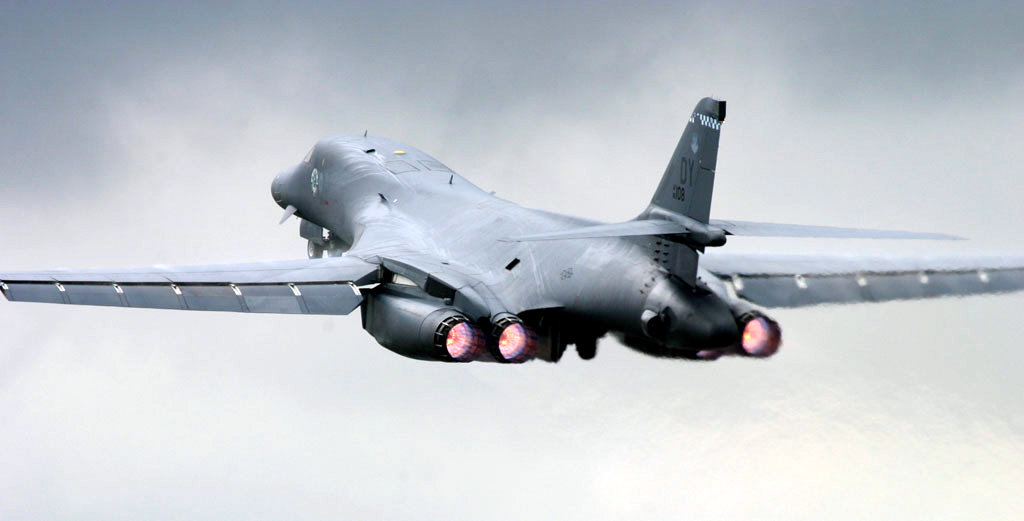
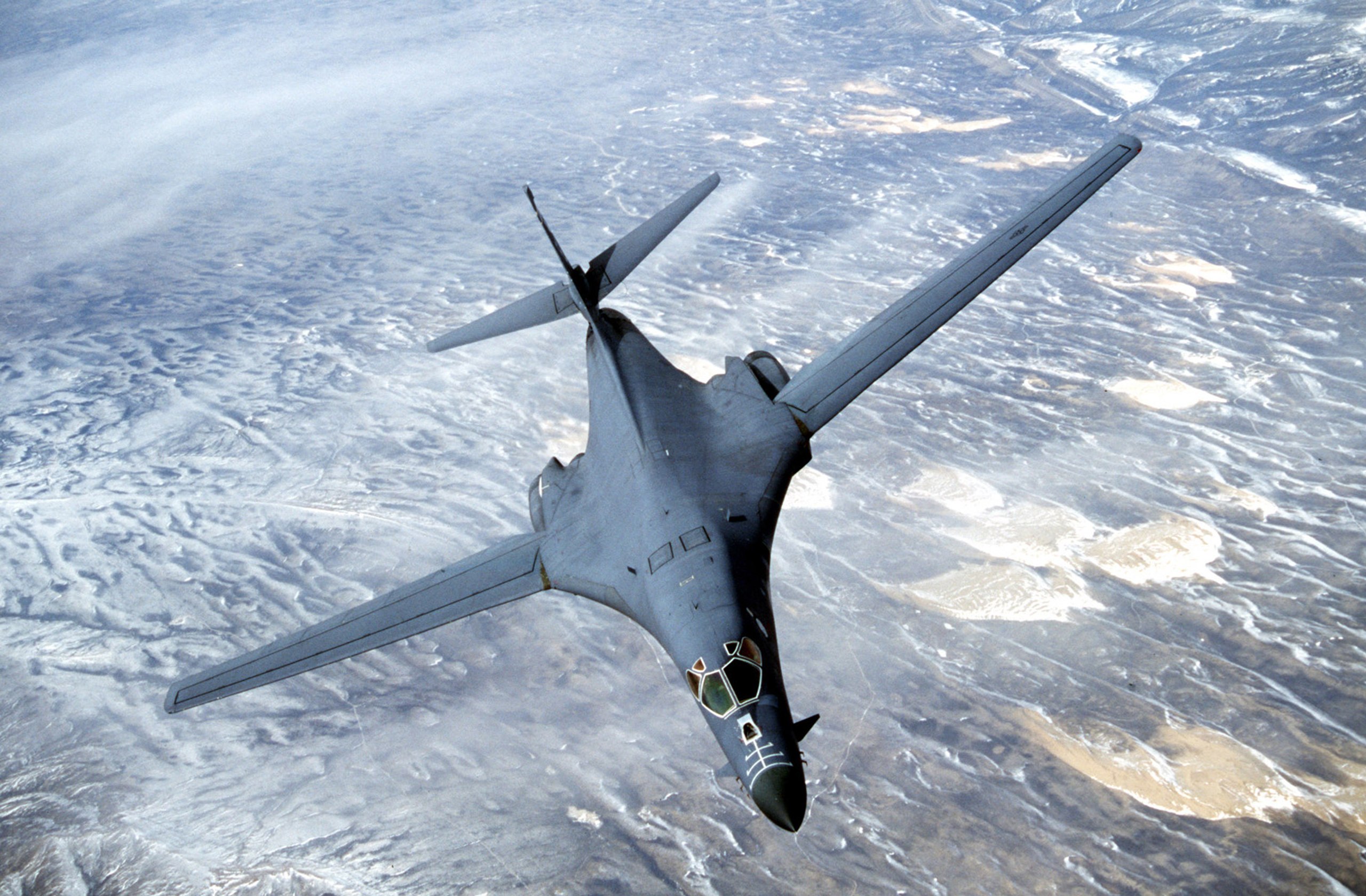
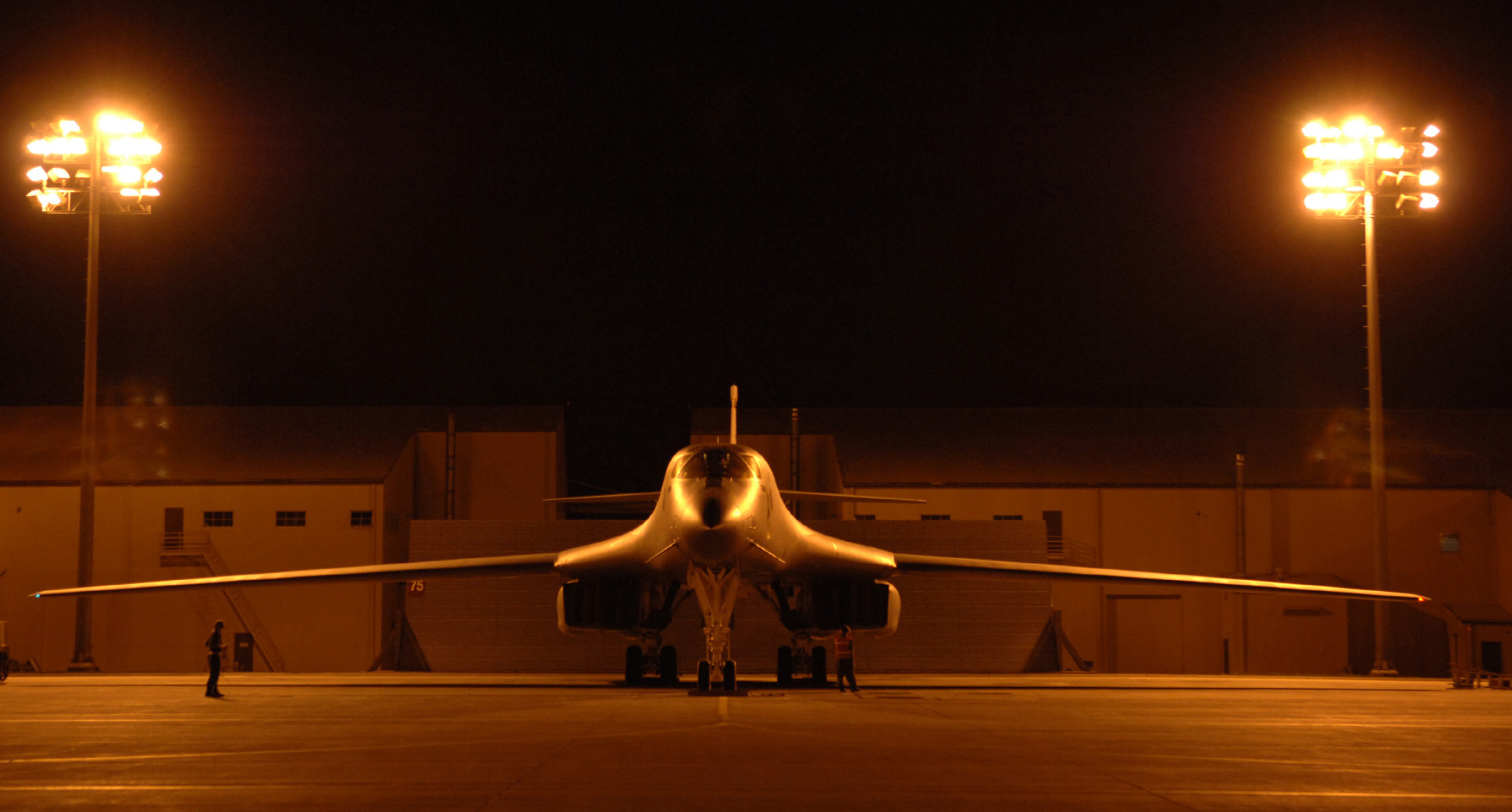
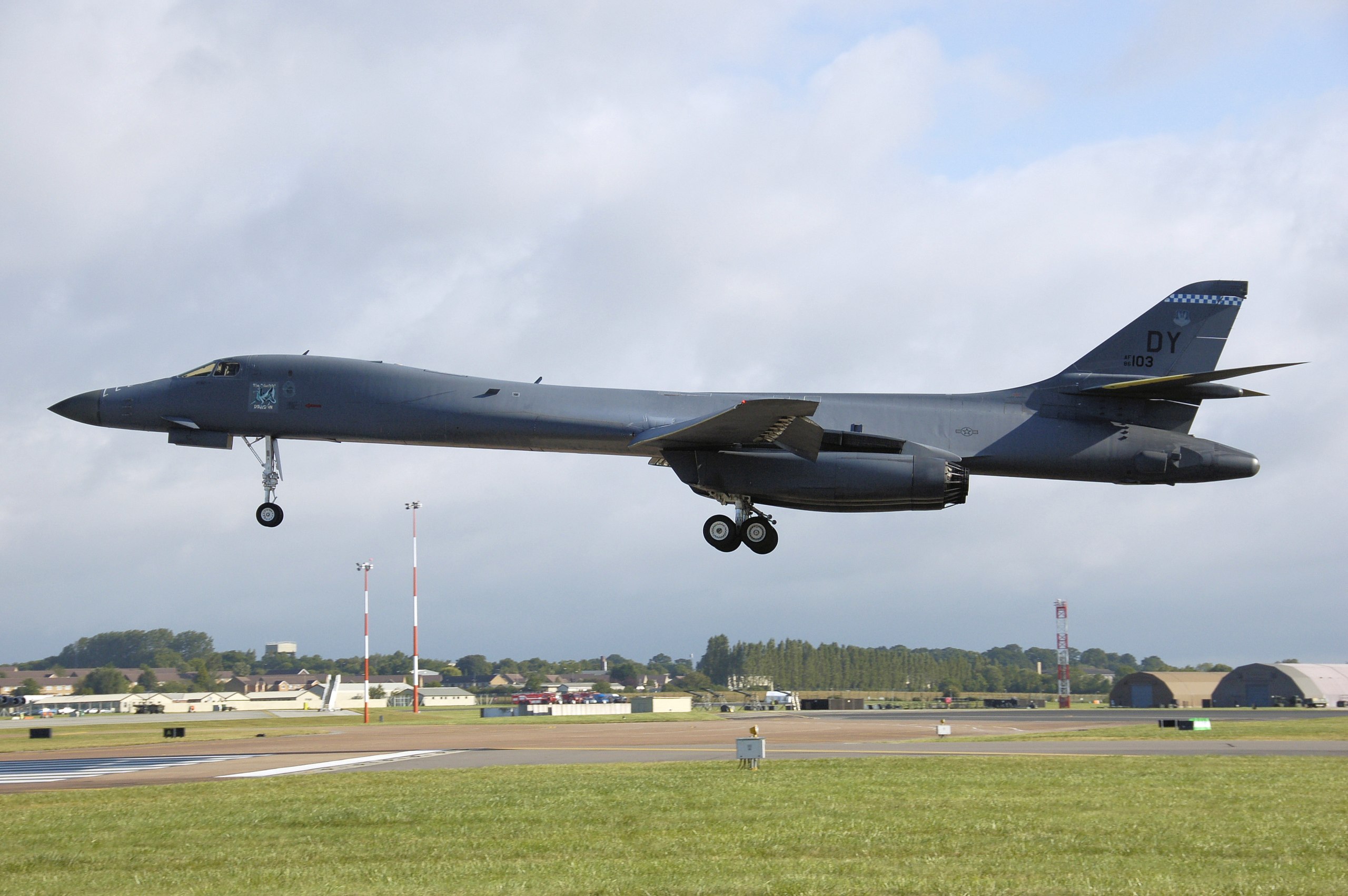
The Rockwell B-1 Lancer[b] is a supersonic variable-sweep wing, heavy bomber used by the United States Air Force. It has been nicknamed the "Bone" (from "B-One").[2][3] It is one of the Air Force's three strategic bombers, along with the B-2 Spirit and the B-52 Stratofortress, as of 2024. Its 75,000-pound (34,000 kg) payload is the heaviest of any U.S. bomber.
The B-1 was first envisioned in the 1960s as a bomber that would combine the Mach 2 speed of the B-58 Hustler with the range and payload of the B-52, ultimately replacing both. After a long series of studies, North American Rockwell (subsequently renamed Rockwell International, B-1 division later acquired by Boeing) won the design contest for what emerged as the B-1A. Prototypes of this version could fly Mach 2.2 at high altitude and long distances at Mach 0.85 at very low altitudes. The program was canceled in 1977 due to its high cost, the introduction of the AGM-86 cruise missile that flew the same basic speed and distance, and early work on the B-2 stealth bomber.
The program was restarted in 1981, largely as an interim measure due to delays in the B-2 stealth bomber program. The B-1A design was altered, reducing top speed to Mach 1.25 at high altitude, increasing low-altitude speed to Mach 0.96, extensively improving electronic components, and upgrading the airframe to carry more fuel and weapons. Dubbed the B-1B, deliveries of the new variant began in 1985; the plane formally entered service with Strategic Air Command (SAC) as a nuclear bomber the following year. By 1988, all 100 aircraft had been delivered.
With the disestablishment of SAC and its reassignment to the Air Combat Command in 1992, the B-1B's nuclear capabilities were disabled and it was outfitted for conventional bombing. It first served in combat during Operation Desert Fox in 1998 and again during the NATO action in Kosovo the following year. The B-1B has supported U.S. and NATO military forces in Afghanistan and Iraq. As of 2021 the Air Force has 45 B-1Bs.[5] The Northrop Grumman B-21 Raider is to begin replacing the B-1B after 2025; all B-1s are planned to be retired by 2036.[6]
B-1 Lancer CHARACTERISTICS
General characteristics
Crew: 4 (Aircraft Commander, Pilot, Offensive Systems Officer, and Defensive Systems Officer)
Length: 146 ft (45 m)
Wingspan: 137 ft (42 m)
Swept wingspan: 79 ft (24 m) swept
Height: 34 ft (10 m)
Wing area: 1,950 sq ft (181 m2)
Airfoil: NACA69-190-2
Empty weight: 192,000 lb (87,090 kg)
Gross weight: 326,000 lb (147,871 kg)
Max takeoff weight: 477,000 lb (216,364 kg)
A B-1B flying over the Pacific ocean
Powerplant: 4 × General Electric F101-GE-102 afterburning turbofan engines, 17,390 lbf (77.4 kN) thrust each dry, 30,780 lbf (136.9 kN) with afterburner
Performance
Maximum speed: 721 kn (830 mph, 1,335 km/h) at altitude of 40,000 ft (12,000 m); 608 kn (1,126 km/h) at 200–500 ft (61–152 m)
Maximum speed: Mach 1.25
Range: 5,100 nmi (5,900 mi, 9,400 km) with weapon load of 37,000 lb (16,800 kg). Max range is 6,500 nmi (12,000 km).[186]
Combat range: 2,993 nmi (3,444 mi, 5,543 km)
Service ceiling: 60,000 ft (18,000 m)
Rate of climb: 5,678 ft/min (28.84 m/s)
Wing loading: 167 lb/sq ft (820 kg/m2)
Thrust/weight: 0.38 at gross weight
Armament
Hardpoints: 6 external hardpoints for ordnance[c] with a capacity of 50,000 pounds (23,000 kg), with provisions to carry combinations of:
Missiles:
AGM-154 Joint Standoff Weapon (JSOW)
AGM-158C Long Range Anti-Ship Missile (LRASM)[189]
AGM-158 Joint Air to Surface Standoff Missile (JASSM)
AGM-183 Air-Launched Rapid Response Weapon (ARRW)[190]
Bombs:
Mk-82 air inflatable retarder (AIR) general purpose (GP) bombs[191]
Mk-82 low drag general purpose (LDGP) bombs[192]
Mk-62 Quickstrike sea mines[193]
Mk-84 general-purpose bombs
Mk-65 naval mines[194]
CBU-87/89/CBU-97 Cluster Bomb Units (CBU)[d]
CBU-103/104/105 Wind Corrected Munitions Dispenser (WCMD) CBUs
GBU-31 JDAM GPS guided bombs (Mk-84 GP or BLU-109 warhead)[e]
GBU-38 JDAM GPS guided bombs (Mk-82 GP warhead)[f]
GBU-38 JDAM (using rotary launcher mounted multiple ejector racks)[195]
GBU-54 LaserJDAM (using rotary launcher mounted multiple ejector racks)[195]
GBU-39 Small Diameter Bomb GPS guided bombs[g] (not fielded on B-1 yet)
Previously B61 or B83 nuclear bombs could be carried.[194]
Bombs: 3 internal bomb bays for 75,000 pounds (34,000 kg) of ordnance.[
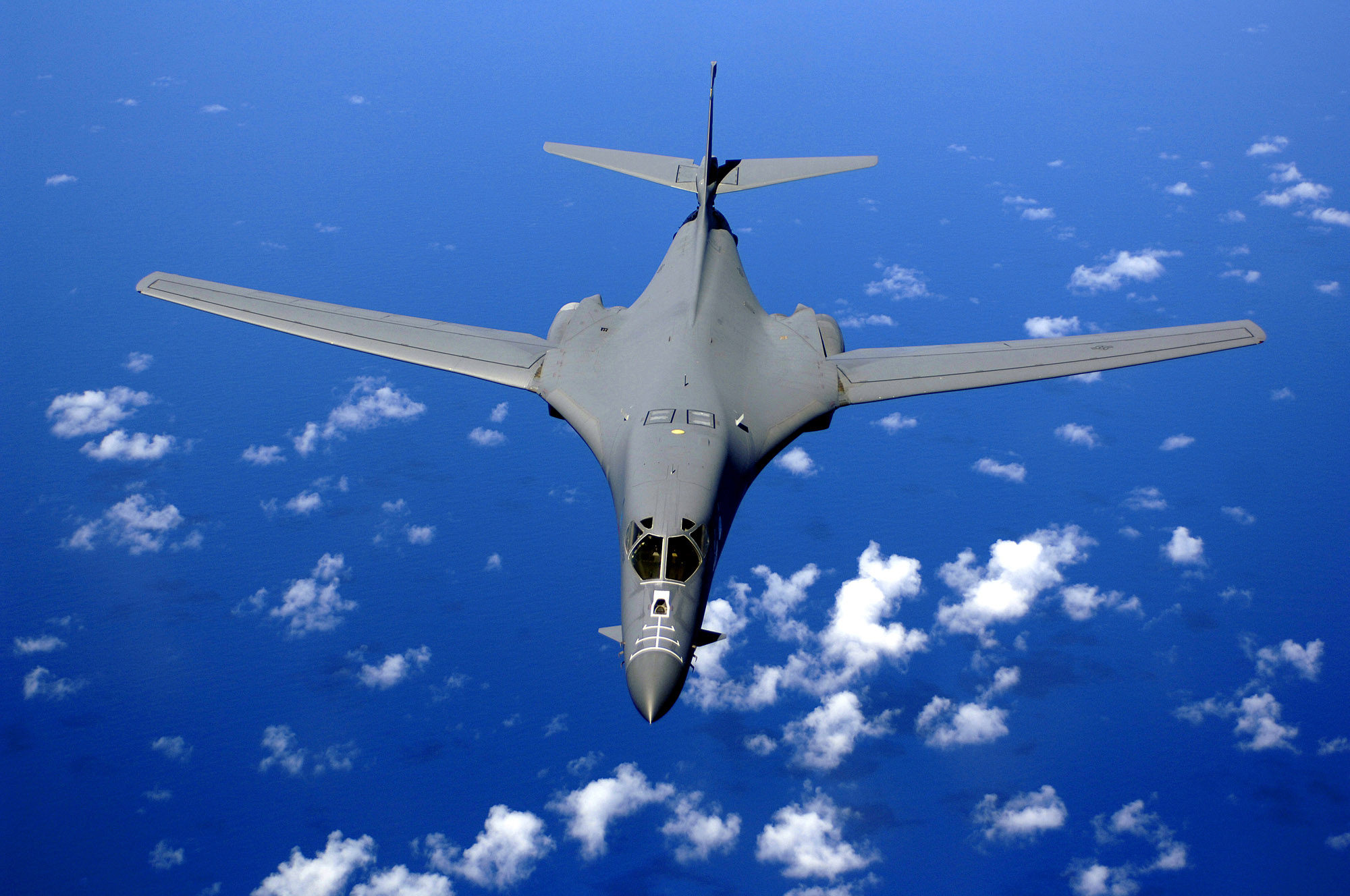
It is one of the Air Force's three strategic bombers, along with the B-2 Spirit and the B-52 Stratofortress