Lockheed Martin
B-52 Stratofortress
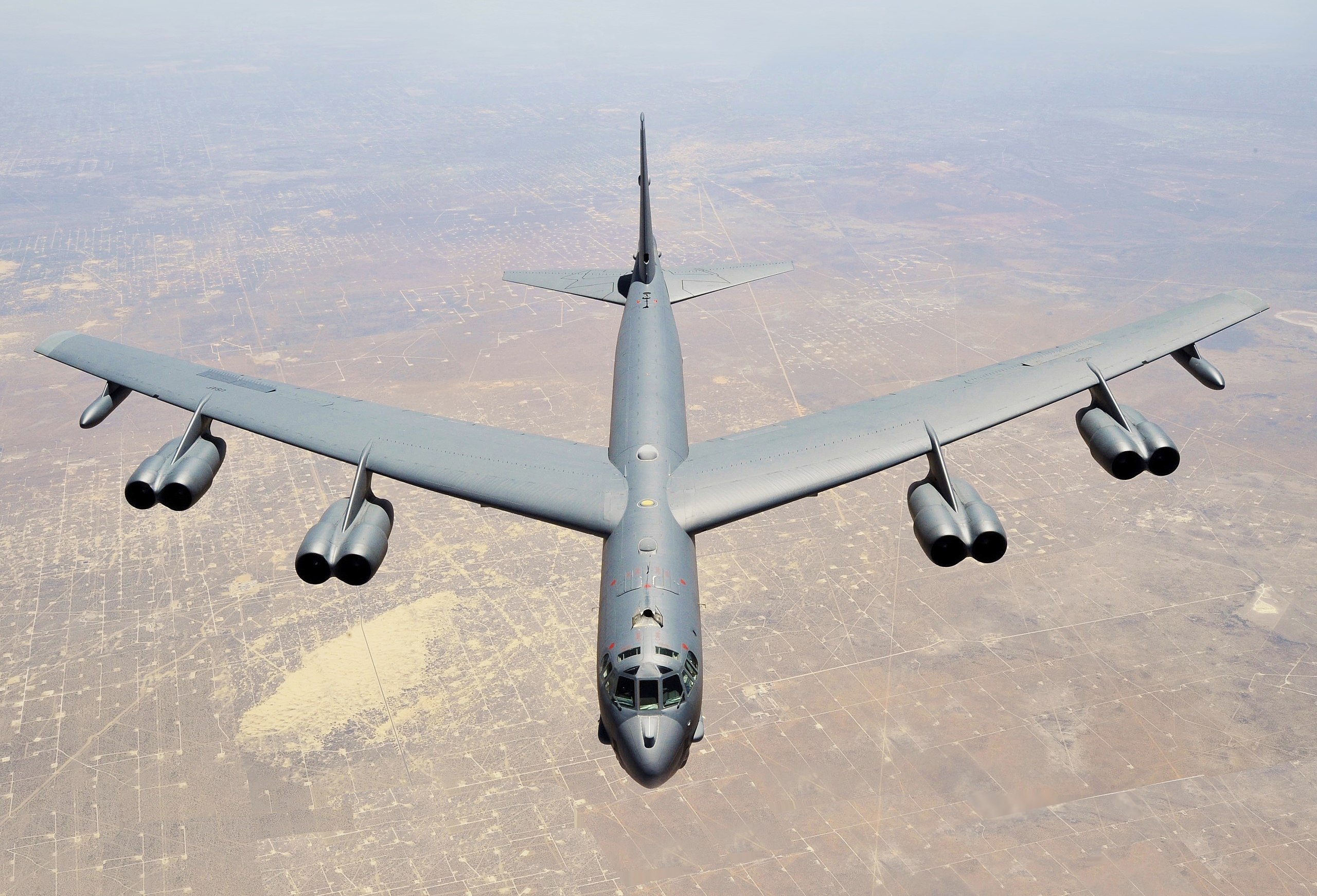
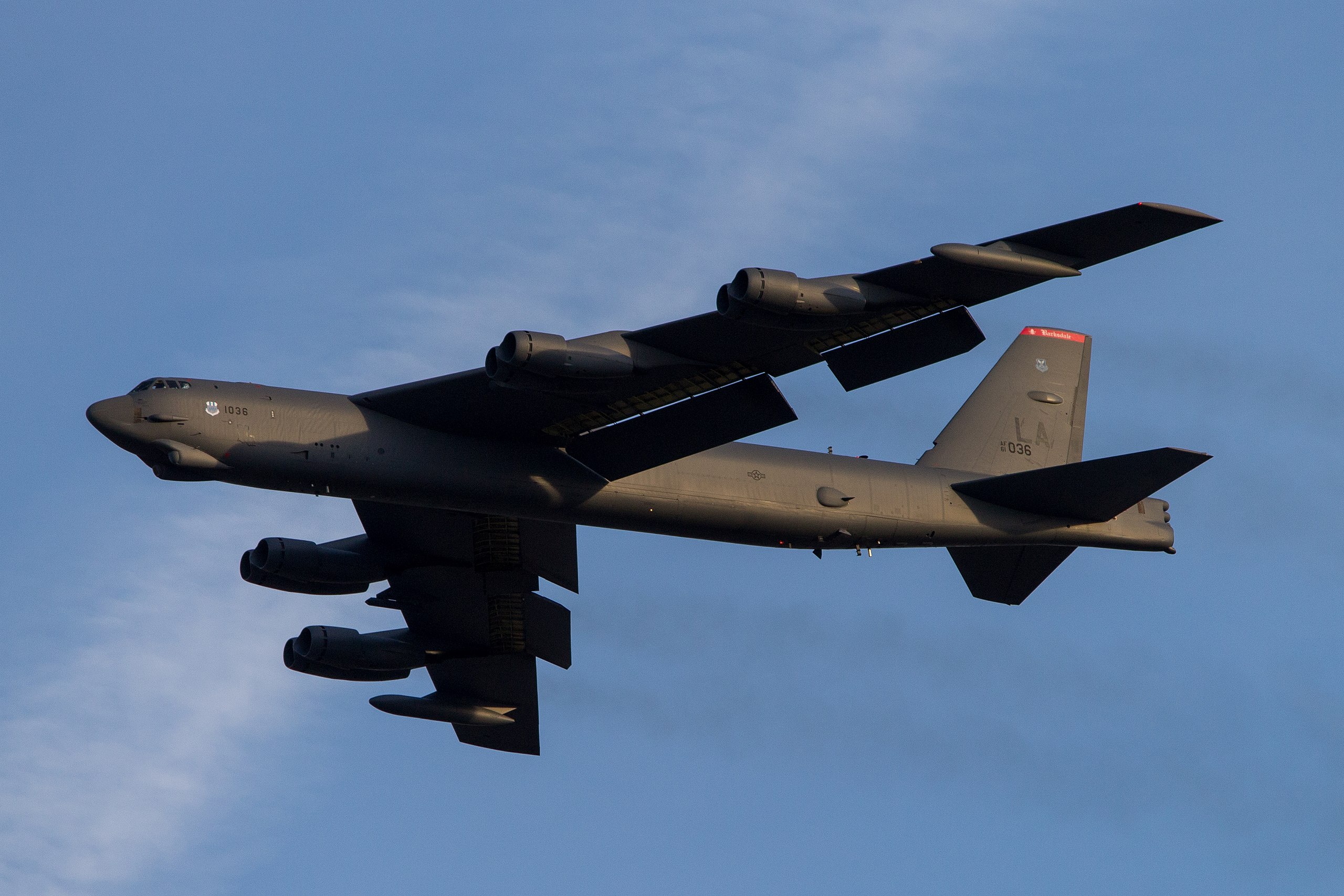
The Boeing B-52 Stratofortress is an American long-range, subsonic, jet-powered strategic bomber. The B-52 was designed and built by Boeing, which has continued to provide support and upgrades. It has been operated by the United States Air Force (USAF) since the 1950s, and NASA for over 40 years. The bomber can carry up to 70,000 pounds (32,000 kg) of weapons[2] and has a typical combat range of around 8,800 miles (14,200 km) without aerial refueling.[
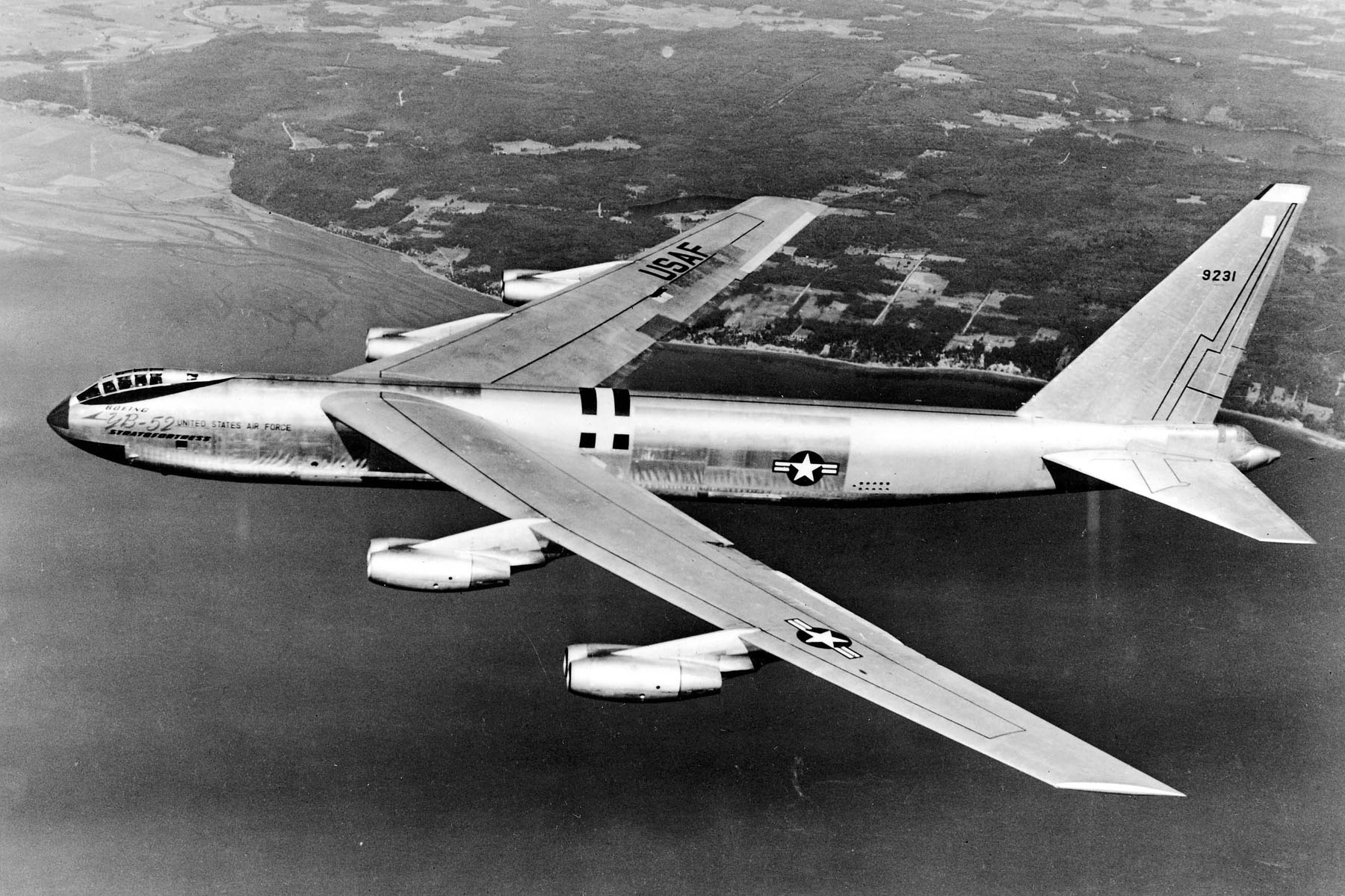
Beginning with the successful contract bid in June 1946, the B-52 design evolved from a straight wing aircraft powered by six turboprop engines to the final prototype YB-52 with eight turbojet engines and swept wings. The B-52 took its maiden flight in April 1952. The B-52 has been in service with the USAF since 1955, and NASA from 1959 to 2007.[4] Built to carry nuclear weapons for Cold War–era deterrence missions, the B-52 Stratofortress replaced the Convair B-36 Peacemaker.
Superior performance at high subsonic speeds and relatively low operating costs have kept them in service despite the development of more advanced strategic bombers, such as the Mach 2+ Convair B-58 Hustler, the canceled Mach 3 North American XB-70 Valkyrie, the variable-geometry Rockwell B-1 Lancer, and the stealth Northrop Grumman B-2 Spirit. A veteran of several wars, the B-52 has dropped only conventional munitions in combat.
The B-52's official name Stratofortress is rarely used; informally, the aircraft has become commonly referred to as the BUFF (Big Ugly Fat Fucker/Fella).[5][6][7][Note 1] There are 72 aircraft in inventory as of 2022;[9] 58 operated by active forces (2nd Bomb Wing and 5th Bomb Wing), 18 by reserve forces (307th Bomb Wing), and about 12 in long-term storage at the Davis-Monthan AFB Boneyard.[2][3][10][11][12] The bombers flew under the Strategic Air Command (SAC) until it was disestablished in 1992 and its aircraft absorbed into the Air Combat Command (ACC); in 2010, all B-52 Stratofortresses were transferred from the ACC to the new Air Force Global Strike Command (AFGSC). The B-52 completed 60 years of continuous service with its original operator in 2015. After being upgraded between 2013 and 2015, the last airplanes are expected to serve into the 2050s.
B-52 Stratofortress CHARACTERISTICS
General characteristics
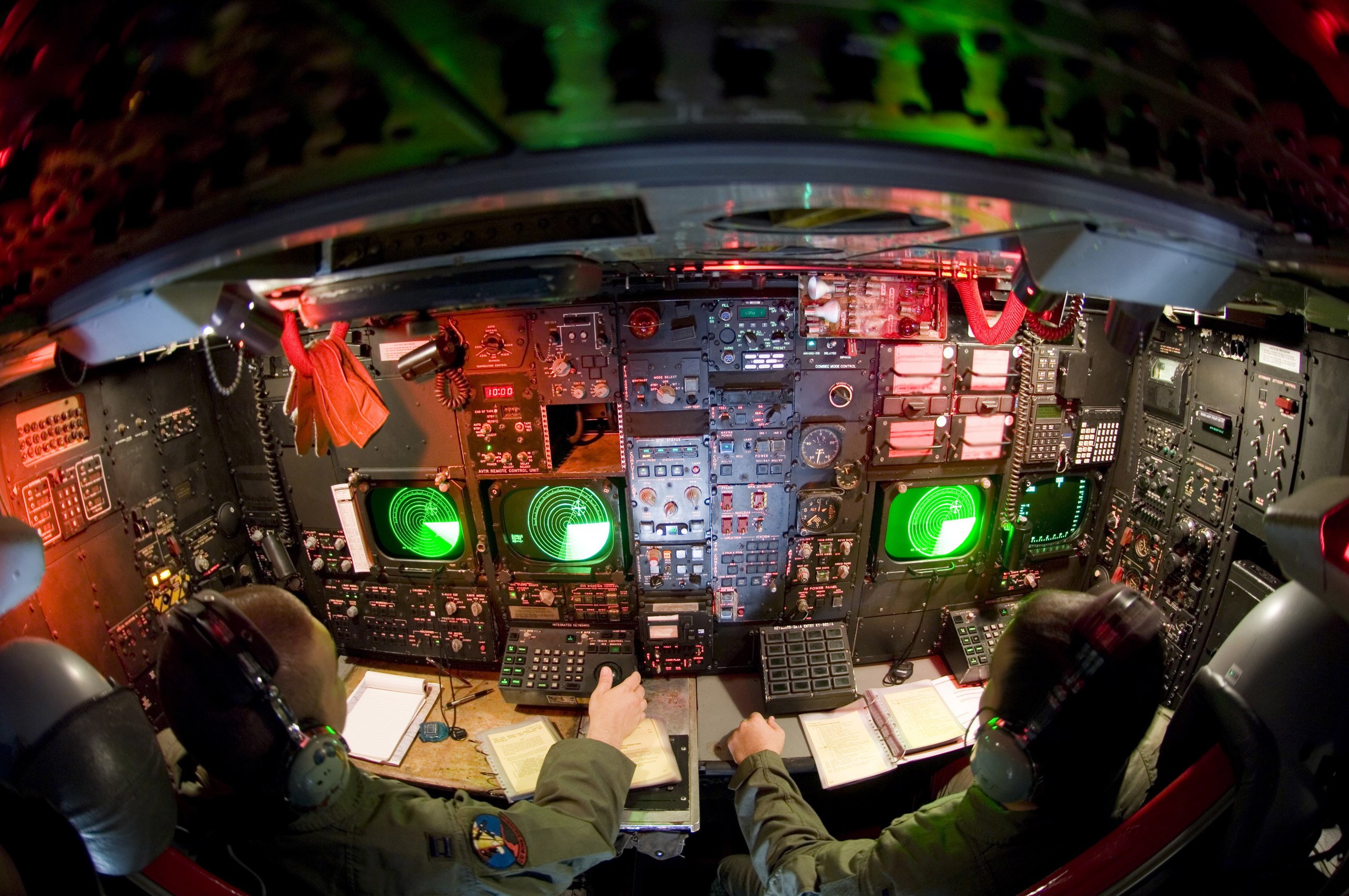
Crew: 5 (pilot, copilot, weapon systems officer, navigator, electronic warfare officer)
Length: 159 ft 4 in (48.5 m)
Wingspan: 185 ft 0 in (56.4 m)
Height: 40 ft 8 in (12.4 m)
Wing area: 4,000 sq ft (370 m2)
Airfoil: NACA 63A219.3 mod root, NACA 65A209.5 tip
Empty weight: 185,000 lb (83,250 kg)
Gross weight: 265,000 lb (120,000 kg)
Max takeoff weight: 488,000 lb (221,323 kg)
Fuel capacity: 312,197 lb (141,610 kg), 47,975 U.S. gal (181,610 L)
Zero-lift drag coefficient: 0.0119 (estimated)
Drag area: 47.60 sq ft (4.42 m2)
Aspect ratio: 8.56
Powerplant: 8 × Pratt & Whitney TF33-P-3/103 turbofans, 17,000 lbf (76 kN) thrust each
Performance
Maximum speed: 650 mph (1,050 km/h, 560 kn)
Cruise speed: 509 mph (819 km/h, 442 kn)
Combat range: 8,800 mi (14,200 km, 7,600 nmi)
Ferry range: 10,145 mi (16,327 km, 8,816 nmi)
Service ceiling: 50,000 ft (15,000 m)
Rate of climb: 6,270 ft/min (31.85 m/s)
Wing loading: 120 lb/sq ft (586 kg/m2)
Thrust/weight: 0.31
Lift-to-drag ratio: 21.5 (estimated)
Armament
Guns: 1× 20 mm (0.787 in) M61 Vulcan cannon originally mounted in a remote-controlled tail turret on the H-model, removed in 1991 from all operational aircraft.
Bombs: Approximately 70,000 pounds (32,000 kg) mixed ordnance; bombs, mines, missiles, in various configurations.
Avionics
Electro-optical viewing system that uses platinum silicide forward looking infrared and high resolution low-light-level television sensors
ADR-8 chaff rocket (1965–1970)[257]
LITENING Advanced Targeting System[300]
Sniper Advanced Targeting Pod[301]
IBM AP-101 computer
The B-52's official name Stratofortress is rarely used; informally, the aircraft has become commonly referred to as the BUFF (Big Ugly Fat Fucker/Fella).