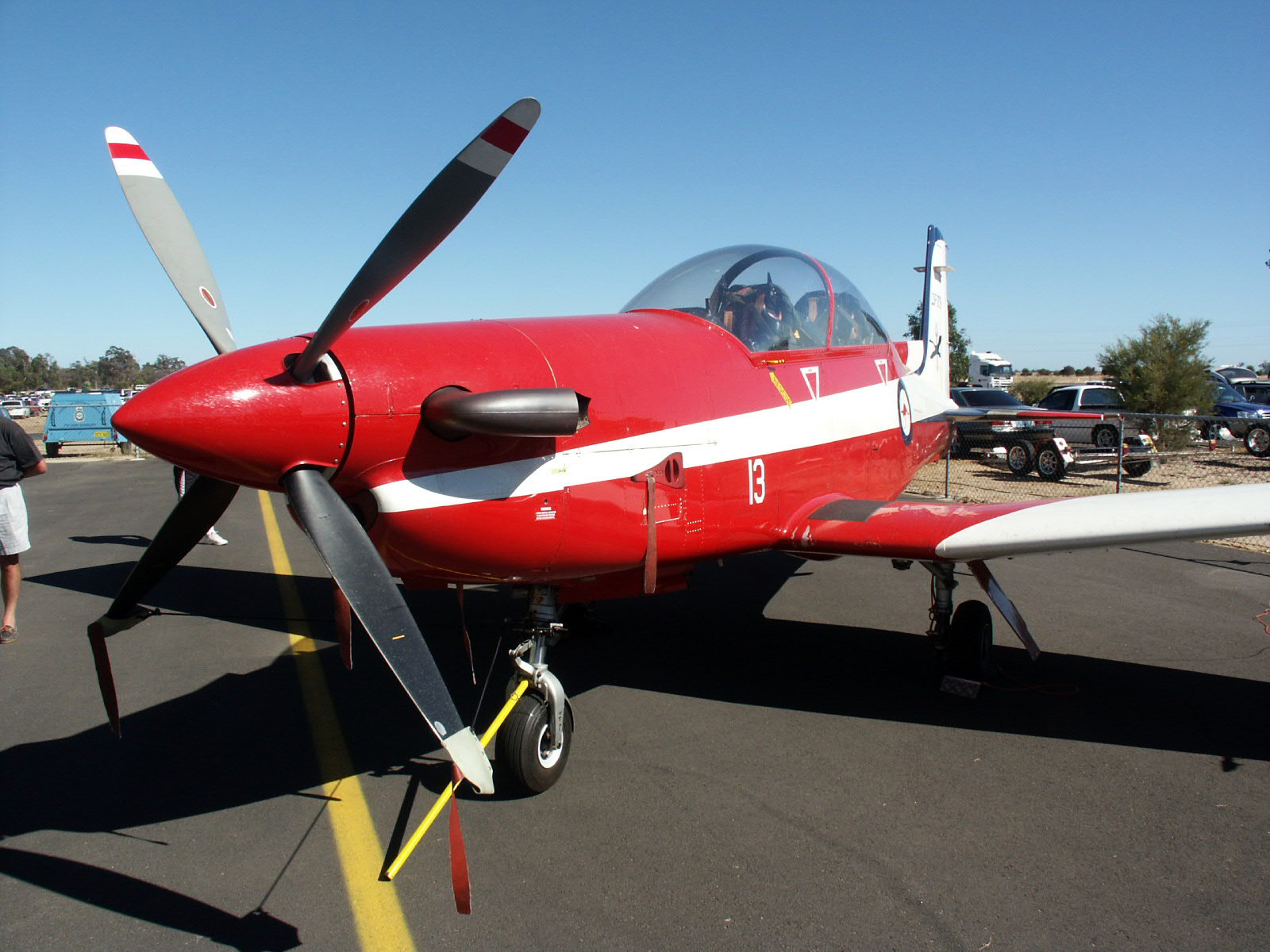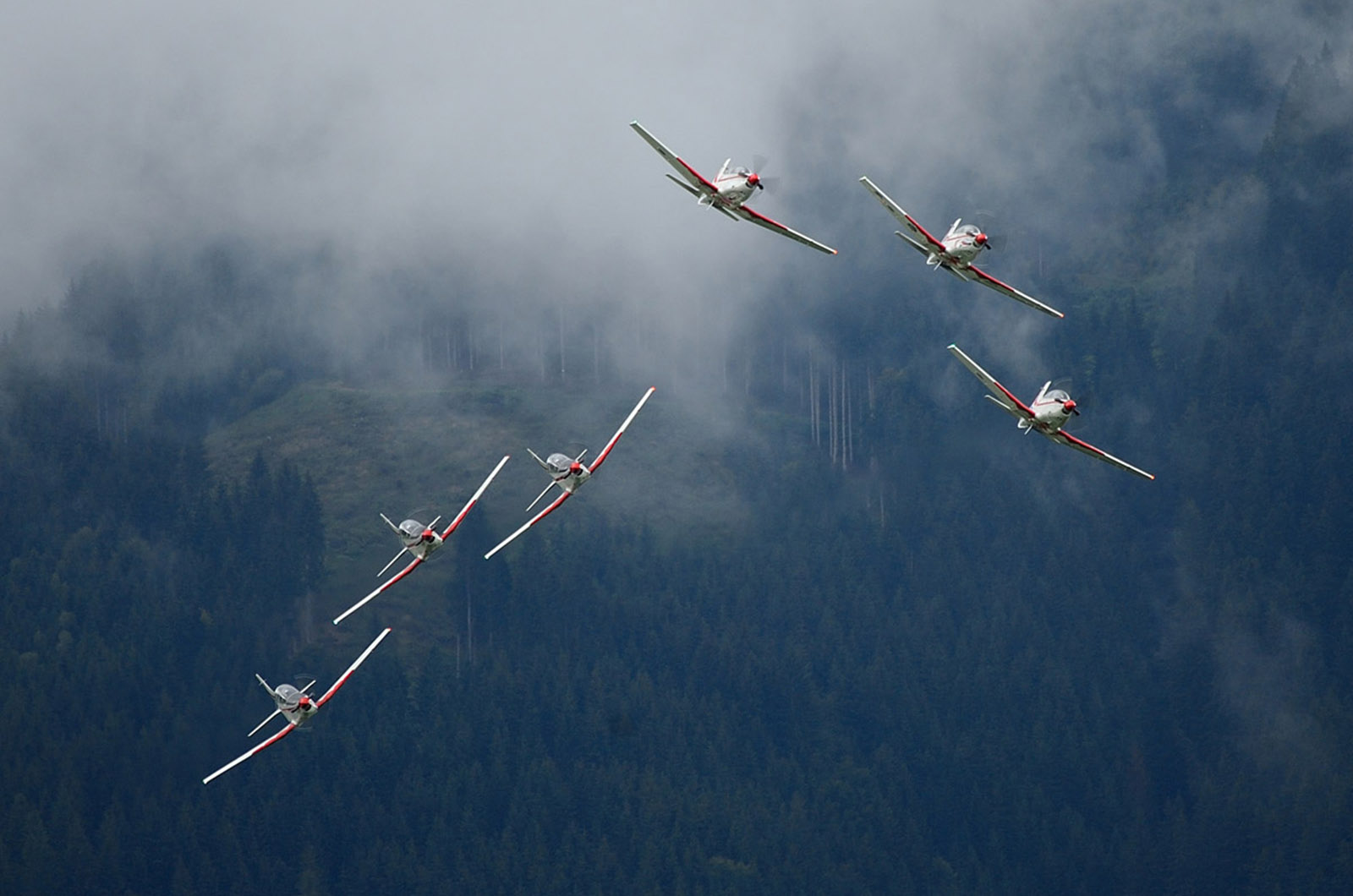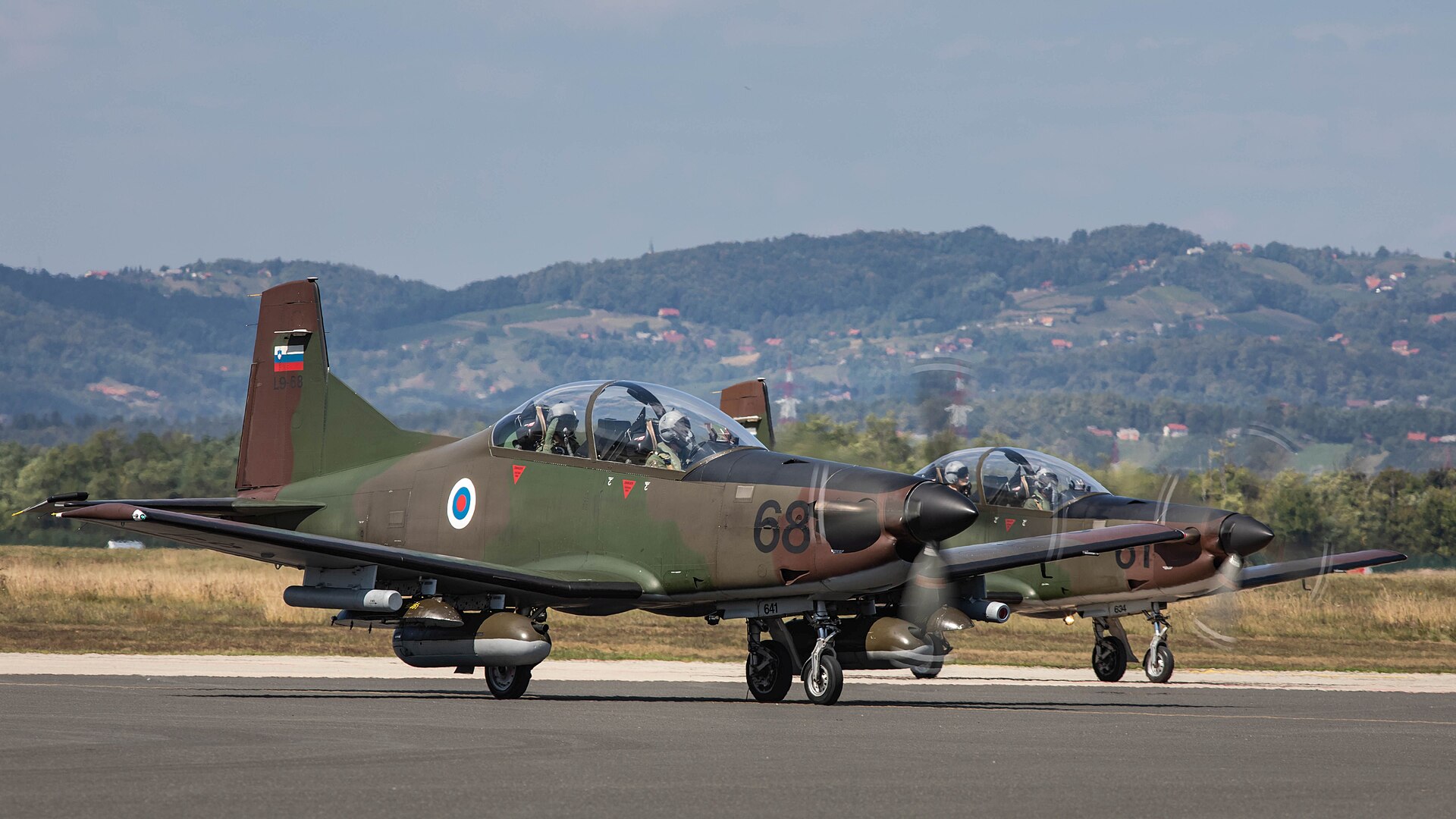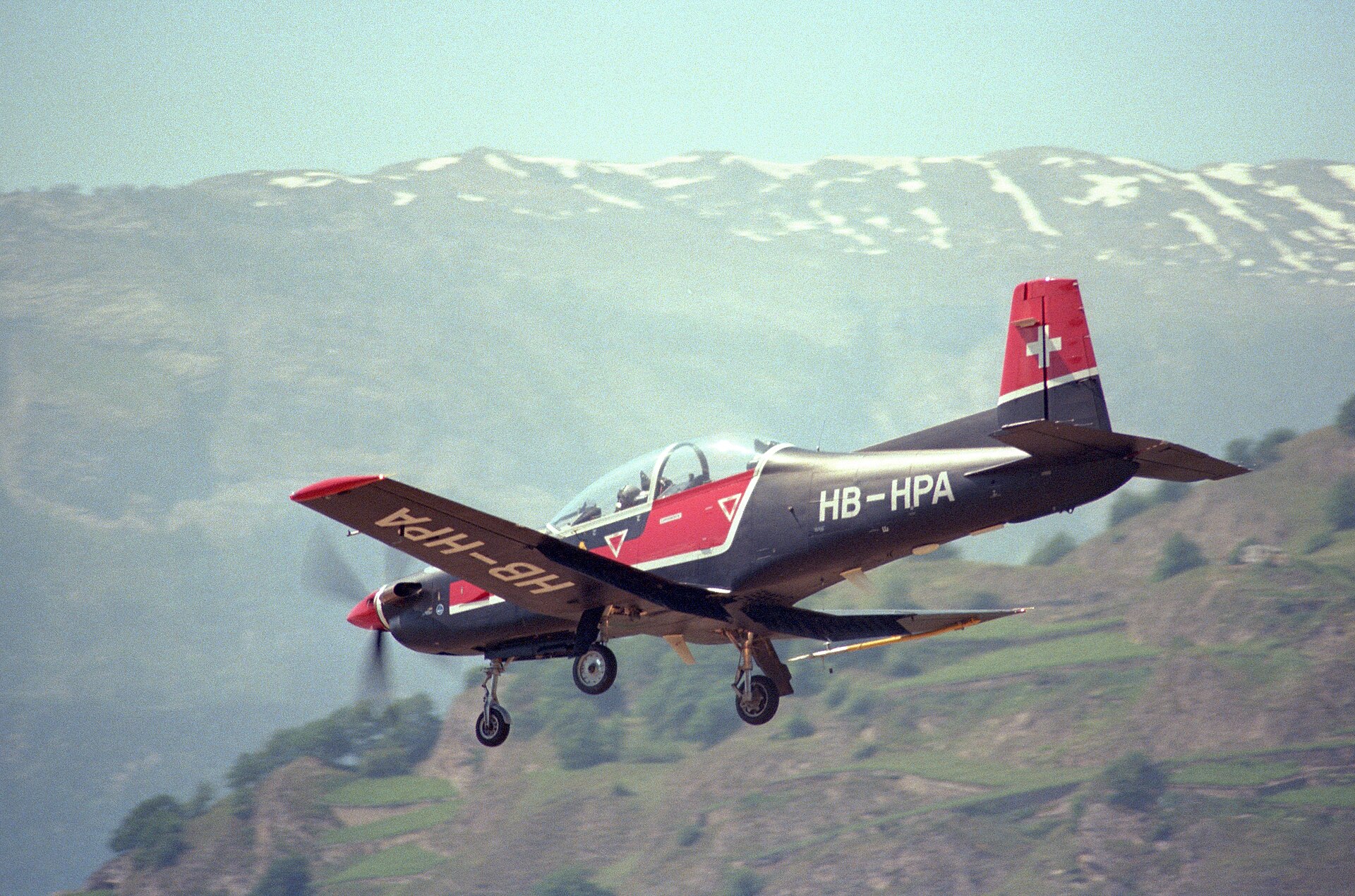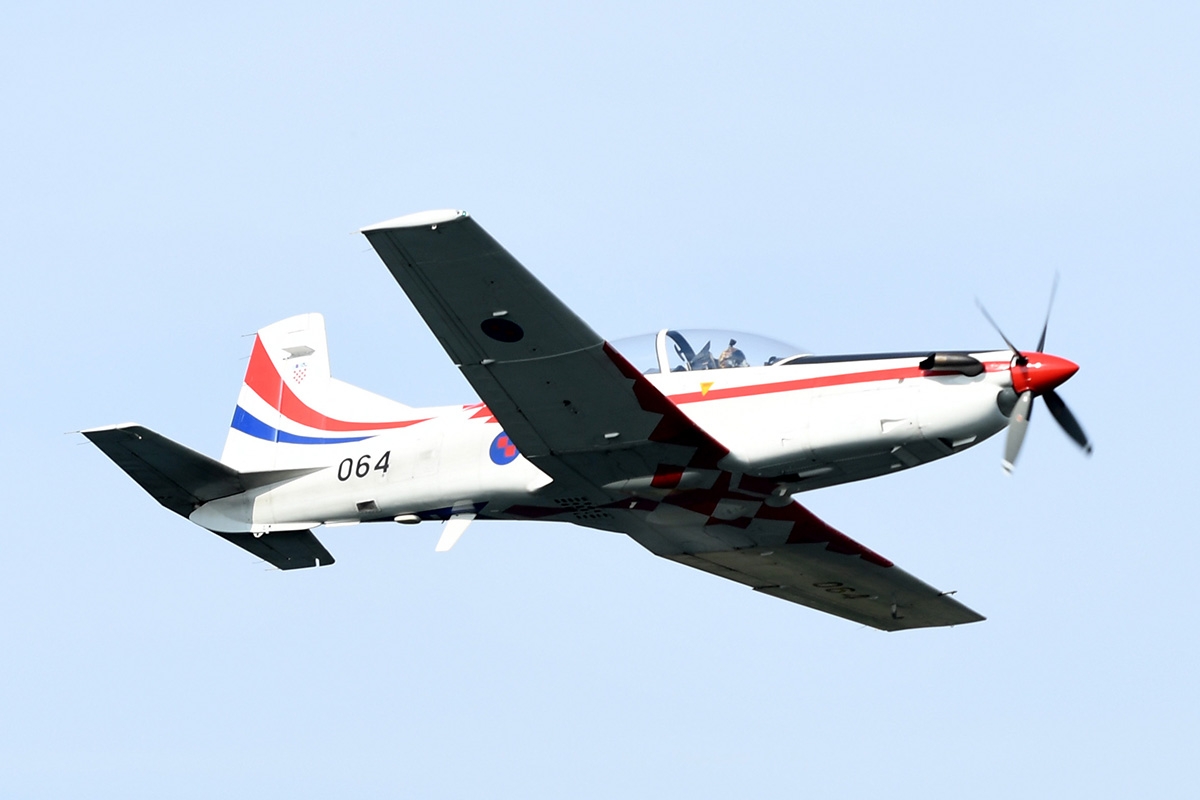
The Pilatus PC-9 is a single-engine, low-wing tandem-seat turboprop training aircraft designed and manufactured by Pilatus Aircraft of Switzerland. Developed as a more powerful evolution of the preceding Pilatus PC-7, the PC-9 features an enlarged cockpit and a ventral airbrake while possessing only a low level of structural commonality with its predecessor.
During May 1985, the maiden flight of the prototype PC-9 was conducted; four months later, type certification was received and permitting deliveries to commence that same year. During the mid-1980s, Pilatus teamed up with British Aerospace to market the PC-9; the first production order for the type was placed by the Royal Saudi Air Force.
Production of the PC-9 has continued into the twenty-first century and in excess of 250 aircraft have been produced across five different variants. One of these variants, the Beechcraft T-6A Texan II, has been produced under licence by the American firm Beechcraft in the United States. The PC-9 has also been assembled by the Australian company Hawker de Havilland.